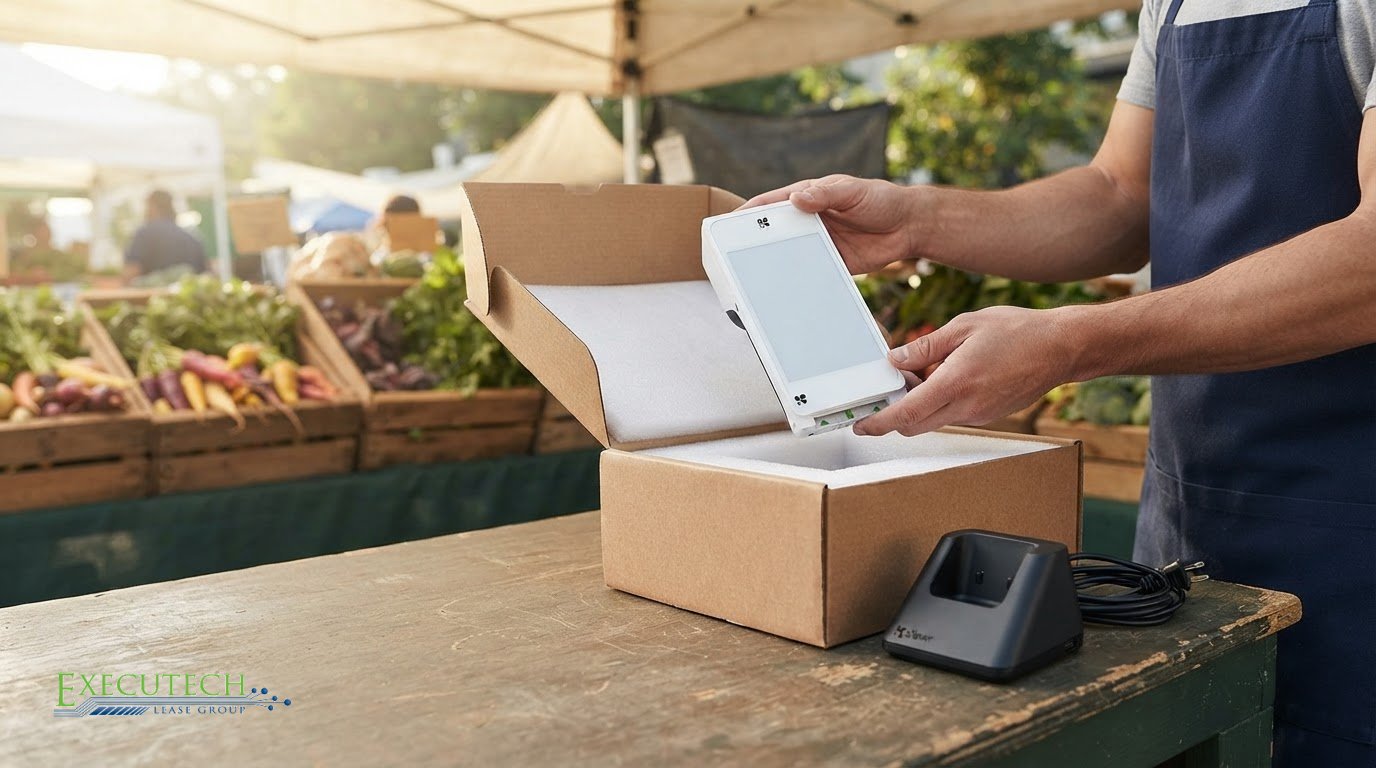
What happens at the end of a credit card terminal lease depends on the agreement: you may need to return the terminal, buy it, or continue leasing it. Don’t assume that returning the equipment automatically ends your payments. The lease’s end-of-term instructions determine your next step.
Returning a leased terminal may seem like the end of your obligations, but the agreement could also include a buyout or renewal option. It’s important to understand how the lease ends and when payments stop. This guide explains what to check in your agreement, how return and buyout options work, and how leasing compares with renting or buying. Use those details to decide whether to keep the terminal, return it, or choose a different arrangement when the term ends.
Key Takeaways
- Returning a terminal doesn’t necessarily end your lease payments; the contract’s end-of-term process matters.
- Closing your business or changing processors may leave the equipment lease in place, so separate the lease from your processing agreement.
- Look for renewal, return, buyout, and personal guarantee terms to understand what obligations may continue.
- Compare renting, purchasing, and leasing based on equipment ownership and the costs and responsibilities each option involves.
- An FMV lease may offer a choice between buying the terminal and continuing the lease; understand the end-of-term terms before deciding.
1. Effects of closing a business or switching processors
Closing your business doesn’t automatically end a signed terminal lease. Leasing and payment processing are usually separate agreements, so ending one doesn’t automatically cancel the other. You may still owe lease payments after closing, including for the remaining three years if that much time is left on the term. The lease agreement, not the business closure, sets the terms for returning, purchasing, or continuing to use the terminal.
Switching processors also doesn’t automatically cancel a terminal lease. You could move payment processing to a new provider while remaining responsible for payments under a separate equipment lease. Before changing providers, identify which agreement covers the terminal and which governs processing. A new processing setup may involve separate hardware or add-on costs.
A terminal’s portability depends on its lease terms and technical compatibility. The lessor may need to approve a transfer before another business takes over payments or uses the equipment. Even if a transfer is allowed, an informal agreement between businesses may leave the original lessee responsible. A transfer doesn’t necessarily release the original lessee or guarantor, so look for written approval and an explicit written release.
Processor restrictions can also affect whether a terminal works after a switch. Some proprietary terminals, including certain Clover setups, may work only with their associated payment platform. A terminal that can be physically moved may still be incompatible with a different processor’s systems. Before relying on it for transactions with a new provider, confirm the model’s compatibility and any lease transfer conditions.
Keep processing fees separate from equipment obligations. Processing fees typically range from 1.4% to 3.5% per transaction, while a terminal lease payment is a separate charge. Your processing rate may change with a new arrangement, but that change doesn’t erase payments required by the signed equipment lease. Review both agreements so you can distinguish transaction costs from remaining equipment commitments.
When closing or switching, follow a clear sequence: find the signed lease, read its transfer and end-of-term clauses, then contact the lessor about the required process. If another business will take over, get approval and any release in writing before handing over the terminal. If you’re changing processors, confirm compatibility before moving transactions. Keep written records of notices, approvals, return instructions, and the final account statement.
2. Reviewing lease terms, guarantees, and auto-renewal
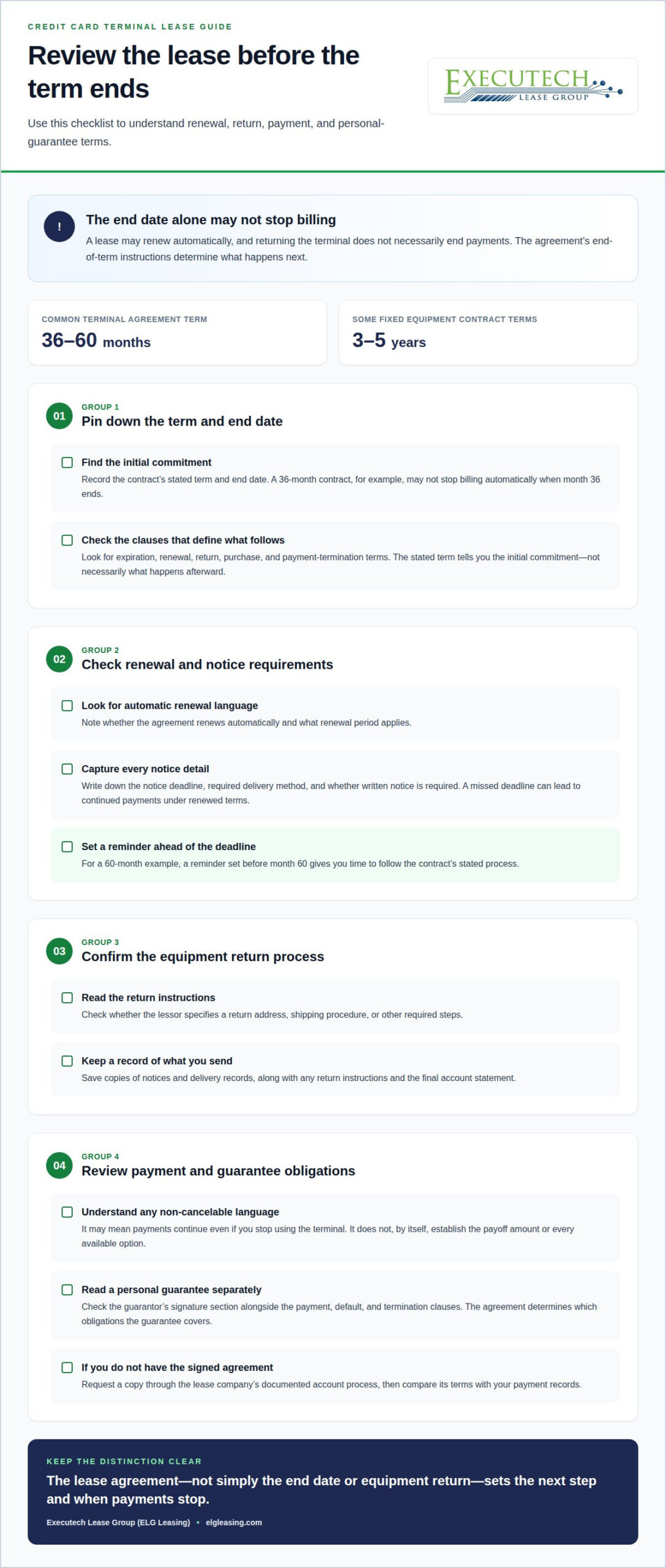
A terminal lease can continue beyond its initial term if the agreement includes automatic renewal. A 36-month contract, for example, may not stop billing automatically when month 36 ends. Read the end-of-term clause for its notice deadline, renewal period, and required method of notice. A missed deadline can change the next step from returning the hardware to continuing payments under renewed terms.
Lease lengths vary by contract. Terminal agreements commonly run 36 to 60 months, while some equipment contracts use fixed terms of three to five years. The stated term tells you how long the initial commitment lasts, not necessarily what happens afterward. Find the clauses covering expiration, renewal, return, purchase, and payment termination. Then compare those clauses with any separate processing agreement.
Check whether the agreement describes the lease as non-cancelable. This may mean payments continue even if you stop using the terminal, but it doesn’t establish the payoff amount or every available option. Not having a copy of the signed agreement also doesn’t automatically invalidate it. Request a copy through the lease company’s documented account process, then compare its terms with your payment records.
Review any personal guarantee separately. It may make the signer responsible for obligations covered by the guarantee, even if the business closes. The agreement determines which obligations it covers. Compare the guarantor’s signature section with the payment, default, and termination clauses. Don’t assume closing the business ends a guarantee tied to the terminal lease.
Use a focused review before the term expires. Note the contract’s end date, renewal language, notice deadline, delivery method, and equipment-return instructions. Check whether the lessor requires written notice and whether it specifies a return address or shipping procedure. Keep copies of notices and delivery records. For a 60-month example, a reminder set before month 60 gives you time to follow the contract’s stated process.
For a new terminal arrangement, ELG offers 12-60 month equipment lease terms. If you’re considering that option, you can begin an equipment lease application and review the proposed term before signing. Comparing the new agreement’s end-of-term language with your current contract helps you understand renewal, ownership, and return obligations before committing.
3. Credit card terminal rental, purchase, and lease options
At the end of a lease, your next step depends on whether you need the machine temporarily, want to own it, or prefer scheduled payments. Renting, buying, and leasing differ in ownership, term, and what happens when you stop using the credit card machine. Compare those terms alongside processor compatibility to make sure the equipment fits your payment setup.
Renting may suit a defined, short-term need, such as a temporary sales location or event. The rental agreement should explain the rental period, return process, and any charges for damage or late return. Don’t assume rental payments build ownership. Rental terms can differ from lease terms, so read the agreement before using the machine.
Buying gives your business ownership of the terminal. You can continue using it, subject to its condition and compatibility with your processor and software. You’re also responsible for arranging repairs or replacements if needed. Before buying, identify the exact model and confirm it fits your payment setup. Ownership alone doesn’t make a credit card machine compatible with every processor.
Leasing spreads equipment payments across a contract term, but the merchant may not own the hardware when that term ends. The agreement may require a return, a buyout, or continued payments under its end-of-term terms. Some terminal leases run 3-4 years, so compare the full payment commitment with the ownership benefits of buying. Monthly payments don’t automatically mean the equipment will become yours.
A useful comparison considers how long you expect to use the terminal. Payment terminal hardware may remain functional for 3 to 5+ years, depending on the equipment and operating conditions. Compare ownership and leasing over 12 to 18 months, then account for the remaining contract obligations beyond that period. A purchase may fit a business expecting long-term use; leasing may fit a business prioritizing scheduled payments over immediate ownership.
For each option, assess the complete arrangement, not just the device. Check whether the terminal works with your processing provider, whether software or setup costs are separate, and what happens when the agreement ends. A rental may be designed for limited use. A purchase leaves you with the asset, while a lease gives you access under a contract, with end-of-term choices set by its terms.
Before choosing, write down your priorities: expected use period, ownership preference, processor compatibility, and end-of-term obligations. Then compare the agreements side by side to see the trade-offs. The lowest recurring payment may not represent the lowest total commitment, and ownership status can matter as much as the machine’s day-to-day function.
4. Fair market value buyout options
If you’re deciding what happens at the end of a credit card terminal lease, an FMV agreement may offer the option to buy the terminal or continue leasing. The contract specifies which options apply and how to begin the end-of-term process. A purchase can transfer ownership under the agreement; continued use and payments follow the applicable lease terms.
Start by finding the FMV and end-of-term clauses in your signed agreement. Check whether the lessor requires a written election, a specific notice method, or payment by a stated deadline. The buyout amount and process should come from the lease terms or the lessor’s written quote. Don’t assume the final scheduled monthly payment means you own the equipment.
Compare buying with continued leasing. A buyout may end lease payments for the terminal and leave you with the equipment. Continuing the lease preserves access under the agreement but means further payments. The practical choice depends on whether you still need the terminal, whether it works with your processing setup, and whether ownership suits your business plans.
Returning the terminal may be another option if the agreement permits it. The lease may specify a return deadline, shipping instructions, or other steps to close the account. Follow the stated notice process and keep the return instructions and delivery records. Sending the machine back alone doesn’t confirm that payments have ended.
Request a written end-of-term statement that separates the buyout amount from any remaining lease payments or other charges. Compare it with your payment history and the agreement’s end-of-term clauses. If the quote includes an unfamiliar amount, ask for an itemized explanation before paying. Keep the final statement and payment confirmation with your lease records.
For example, a merchant whose terminal still works and remains compatible may prefer to buy it. A merchant replacing outdated equipment may prefer to return it, if the lease allows, rather than own a device they won’t use. A business that needs the same equipment longer can compare continued leasing with the buyout before deciding what happens at the end of a credit card terminal lease.
Don’t assume FMV means a guaranteed price based on the terminal’s current condition. The lease’s buyout provision and the lessor’s written quote define the amount and process. Confirm which option closes the lease, when any final payment is due, and whether the lessor requires the terminal’s return. This clarifies whether you’ll own the equipment, keep leasing, or return it.
5. What happens if you stop paying or return a terminal late?
Stopping payments doesn’t end a terminal lease. Returning the machine early also doesn’t cancel the remaining payment obligation. The lease agreement sets out payment dates, default terms, and any return requirements. For example, a merchant who ships the terminal back before the term ends could still owe scheduled payments. The equipment’s location and the payment schedule are separate issues.
A missed payment can put the account in default under the agreement. The consequences depend on the contract and applicable law and may include collection activity or other remedies. The lessor may send a defaulted account to a collection agency. The agreement’s default, notice, and remedy clauses explain what steps may follow and how the lessor communicates them.
A late equipment return can create a separate problem. If the lease requires return by a deadline, keeping the terminal past that date may leave the account unresolved. The agreement may specify shipping instructions, where to send the device, or what happens if it isn’t returned as required. A shipping label or delivery receipt helps document when the terminal left your possession.
If you’re struggling to make payments, don’t assume that stopping automatic withdrawals or returning the hardware closes the account. Review the lease’s default and payoff provisions, then contact the lessor through its recorded account process. Explain whether you can pay, intend to return the terminal, or want to discuss ending the agreement. Keep copies of your correspondence and any written response.
Before sending equipment, gather the account number, lease agreement, recent payment records, and the lessor’s return instructions. Photograph the terminal and accessories before packing them. Use a shipping method with delivery tracking, then save the receipt and delivery confirmation. These records help establish which items you returned and when they were received.
If you receive a collection notice, compare its balance with your payment history and the contract’s stated charges. Keep the notice, note any response deadline, and address disputed amounts in writing. If you’re considering a legal challenge or facing a lawsuit, seek advice from an attorney familiar with your circumstances. Don’t rely on a verbal promise to cancel payments; keep written terms and decisions.
Act before a missed payment or return deadline, rather than waiting for the account to escalate. A clear written record of your request, payment discussion, and equipment delivery can help establish what remains due. The agreement sets out payment and return duties, while applicable law can affect available remedies. Treat nonpayment as an unresolved contract issue until you receive written confirmation of the account’s status.
Executech Lease Group (ELG Leasing): Credit Card Terminal Leasing
Executech Lease Group (ELG Leasing) offers credit card terminal and POS equipment leases for businesses planning their next equipment arrangement. Its options include 12-60 month leases, lease-to-own programs, and FMV lease options. An FMV buyout is about 10% of the original equipment cost.
If your current lease is ending and you’re considering equipment for your next term, compare the agreement’s ownership and end-of-term options with your business needs. A lease-to-own program may suit a business that aims to own its equipment, while an FMV option has a different end-of-term structure. Review the proposed terms before deciding.
Contact Executech Lease Group (ELG) to discuss credit card terminal leasing for your business.
Make your next equipment decision with clarity
Understanding what happens at the end of a credit card terminal lease gives you a starting point for planning, not just a deadline to manage. Treat your next equipment decision as part of your operating plan. Consider how your payment setup may change, how long you expect to use the terminal, and whether ownership matters to your business.
Before choosing a new arrangement, decide what you want to do: keep the equipment, return it, or choose a different lease structure. A clear priority makes it easier to assess the proposed terms and match equipment access to your business needs. Executech Lease Group (ELG) offers lease options for credit card terminals and POS systems.
Take the next step with a clear understanding of what your business needs. A considered equipment decision can help you move forward with confidence.
This article reflects the author’s opinion for general information only and isn’t tax, legal, or accounting advice. Consult your CPA or attorney about your specific situation.
Frequently Asked Questions
Can I return the terminal and walk away?
Not automatically. Returning the terminal doesn’t by itself confirm that your lease account is closed. A delivery scan, for example, proves receipt but not that the lessor processed the return or stopped billing. Keep the tracking details and request written confirmation of receipt and account status. If payments continue, compare the statement with the agreement’s return and payment terms.
What happens when a credit card terminal lease term ends?
The agreement determines whether you return the terminal, buy it, continue leasing, or follow another stated option. What happens at the end of a credit card terminal lease depends on the written terms, not simply the final scheduled payment. If you still need the device, confirm whether continued use requires a new arrangement. Keep the lessor’s written instructions with your contract records.
Does a credit card terminal lease automatically renew?
Some agreements contain automatic-renewal terms, so the scheduled end date alone may not stop the lease. The renewal clause may explain how to prevent continuation, including the required form and method for delivering notice. For example, it may require written notice rather than a phone call. Follow the process in your agreement and retain a copy of your notice and proof that it was sent.
Can you return, buy out, or keep the leased credit card terminal?
Your options depend on the agreement. Returning the terminal ends your possession of it, a buyout may transfer ownership under the stated terms, and continued use may require ongoing payments or a new arrangement. To understand what happens at the end of a credit card terminal lease in your situation, consider whether the device remains compatible with your processor and software. A terminal that powers on may still not fit your payment setup.
How do you return a leased payment terminal and prove it was received?
Follow the lessor’s return instructions and keep records identifying the shipment and equipment. Note the terminal’s serial number and list any included accessories. Photograph the items before packing them, save the carrier receipt and tracking details, and retain delivery confirmation. Then request written acknowledgment identifying the returned equipment and confirming the account status.
This article reflects the author’s opinion for general information only and isn’t tax, legal, or accounting advice. Consult your CPA or attorney about your specific situation.

Article by
Robert Ensminger
Robert Ensminger is the founder and CEO of Executech Lease Group (ELG Leasing), which specializes in equipment leasing and financing solutions for the merchant-services, payments, POS, and FinTech industries. With more than 20 years of industry experience, Robert helps ISOs, payment processors, POS providers, and software companies build practical equipment leasing programs. He founded ELG in 2010. His work focuses on responsive service, transparent program structures, subscription and SaaS-monetization programs, and helping ELG’s partners close more business while creating sustainable revenue.