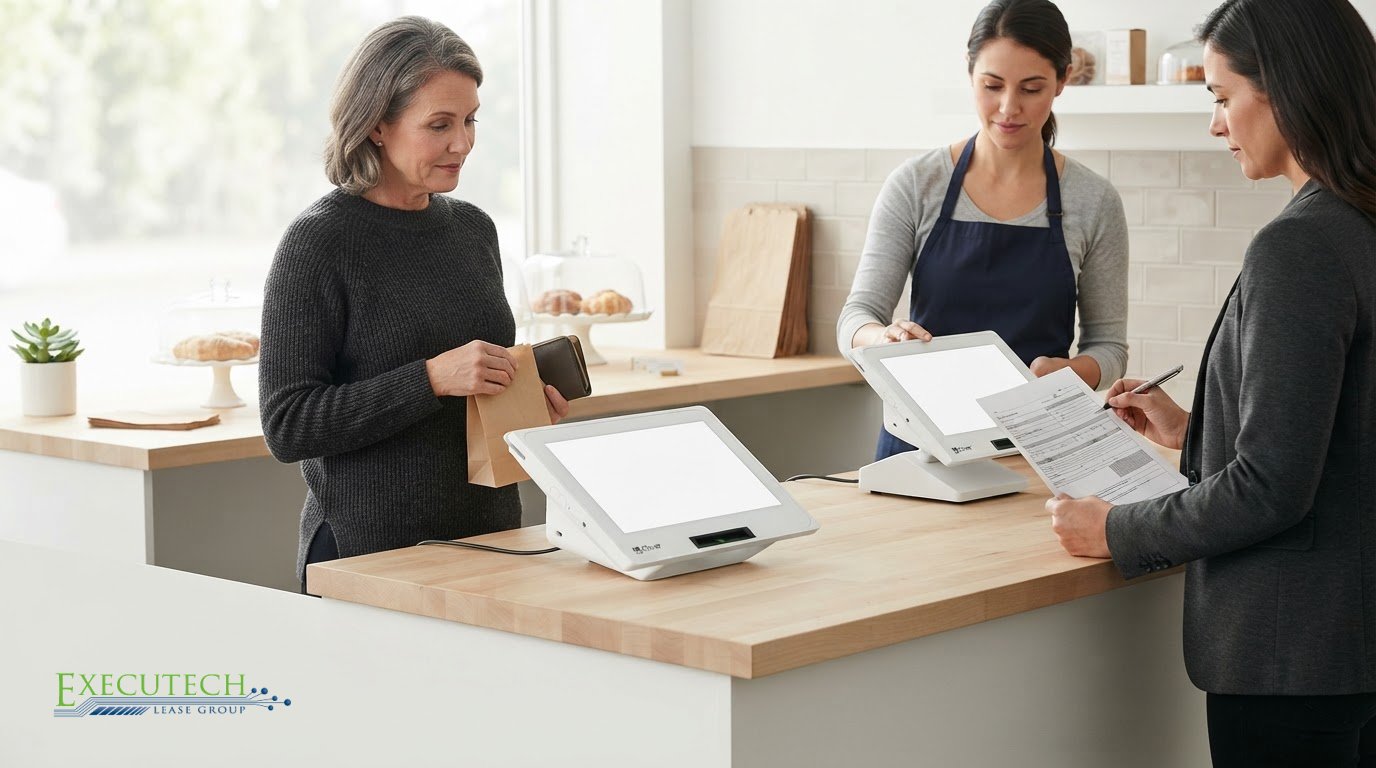
A second terminal isn’t automatically covered by your current lease. When adding a second terminal to an existing lease, review the agreement and document the change in writing, either through an amendment or addendum, or with a separate lease. The right approach depends on how your contract handles additional equipment.
You’re right to look beyond the hardware itself. Adding a device can affect the equipment schedule, payment terms, and fees, so clarify what changes before signing anything. A written update helps keep the original lease and the new terminal’s terms clear.
This guide explains what to review in your existing lease, how to document an added terminal, and which costs to consider before agreeing. It also outlines how lease-to-own and fair market value options differ, so you can assess the terms and obligations involved.
Key Takeaways
- Review your current agreement’s term, equipment details, and restrictions before arranging financing for another terminal.
- Document the additional equipment in a separate lease or written agreement, with clear terms and signatures from the relevant parties.
- Review any proposed charges and how they’re calculated and paid; costs depend on the agreement.
- Follow a clear process: identify the terminal you need, discuss financing, then read the full agreement before signing.
- Explore credit card terminal and POS equipment leasing options, including terms from 12 to 60 months.
Reviewing Your Existing Lease
Before adding another terminal, read the current equipment agreement and identify its term, the equipment it covers, and any restrictions. This can help determine whether the additional device needs separate financing or another written document.
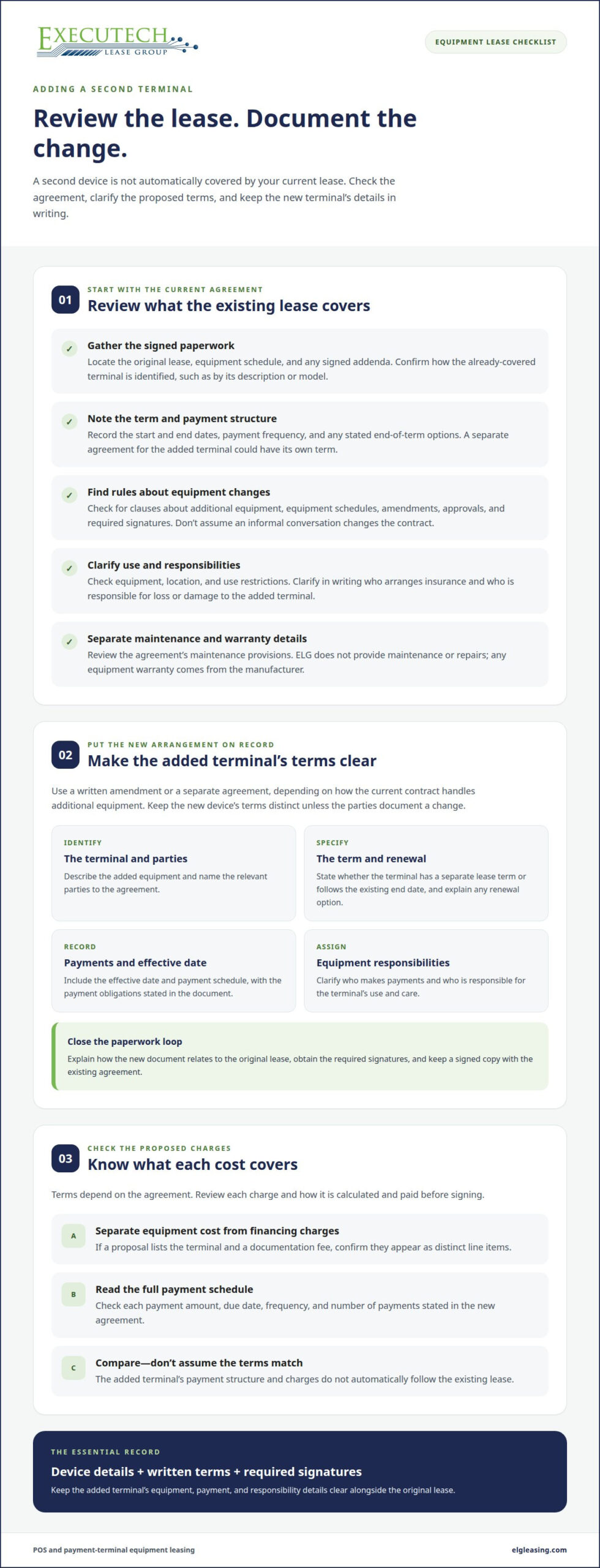
- Locate the signed agreement and related documents. Gather the original lease, equipment schedule, and any signed addendum. Check that the terminal already covered is clearly identified, for example by its description or model. These documents establish the current arrangement and help distinguish leased equipment from equipment your business owns.
- Record the lease term and payment structure. Note the start and end dates, payment frequency, and any stated end-of-term options. Compare those terms with your plans for the additional terminal. A separate agreement could have its own term, so don’t assume it will end alongside the existing lease.
- Find clauses about additional equipment or changes. Search the agreement and any addendum for language about equipment schedules, written amendments, approvals, or adding leased property. Identify who must agree to a change and how it must be signed. Don’t treat an informal conversation or updated inventory list as a contract change unless the agreement says so.
- Separate equipment restrictions from operational expectations. Check whether the agreement limits the listed equipment, its location, or its use. Then describe what the second terminal needs to do, such as serving another checkout station. A specific example can clarify that you’re requesting a separate device, not a change to the equipment already covered.
- Review insurance, maintenance, and liability provisions. Clarify in writing whether insurance applies to the second terminal, who must arrange it, and who is responsible for loss or damage. Review the maintenance provisions, too. ELG does not provide maintenance or repairs; any equipment warranty comes from the manufacturer.
- Flag unresolved terms before discussing financing. Make a short list of questions tied to specific clauses: whether the agreement permits additional equipment, whether a separate document is needed, and how responsibilities apply to the new terminal. Keep expectations distinct from contract language. For example, a business sharing your counter doesn’t automatically become a party to your equipment agreement.
Documenting Financing for a Second Terminal
Document financing for another terminal in a separate lease or written agreement. Keep its equipment, payment, and responsibility terms distinct from the active lease unless the parties document a change.
-
Confirm Permission to Add a Terminal
Review the original lease and identify who is responsible for approving another financed device. State the reason for the request and describe how the terminal will be used. The financing document records the equipment and payment arrangement; it is not an operating permit or license. Keep any business operating requirements separate from the lease paperwork.
-
Address Lease Term and Renewal
Write down whether the additional terminal has a separate lease term or follows the existing agreement’s end date. Specify how any renewal option applies to this device rather than assuming it carries over. The new document should state the payment obligations. ELG requires no money down. A terminal financing agreement is separate from a rental agreement, so tenant screening, occupancy, and roommate arrangements don’t define its terms.
-
Put the Change in Writing
Prepare a lease amendment or separate agreement that identifies the terminal, the parties, the effective date, payment schedule, and equipment responsibilities. Explain how it relates to the original lease and have the required parties sign. Without written terms, the parties could disagree about which device the original lease covers or who owes payments. Keep a signed copy with the existing agreement.
- Keep operating requirements separate. The equipment lease itself does not set out state or local operating requirements. Keep any requirements that apply to your terminal separate from financing terms, and don’t treat a lease amendment as a permit or license.
- Document each party’s responsibilities. Identify who will make payments and who is responsible for the terminal’s use and care. If another business will use the device, explain the arrangement in writing instead of relying on informal expectations. This gives each signer a clear record of the transaction and its scope.
Once the parties, device, and proposed terms are clear, you can submit a financing application for consideration.
Potential Fees and Charges
When adding a second terminal to an existing lease, review every charge in the proposed financing document before signing. The written outline should explain what each charge covers, when it applies, how it is calculated, and how payment works. Terms vary by agreement, so don’t assume the existing lease’s payment structure or charges automatically apply to the added equipment.
- Separate equipment costs from financing charges. Identify the second terminal’s equipment cost separately from any financing-related charge. For example, if a proposal lists the device and a documentation fee, confirm they appear as distinct line items. Don’t assume a charge is part of the equipment cost if the agreement categorizes it separately.
- Review the payment schedule and total commitment. Record each payment amount, due date, frequency, and number of payments stated in the new agreement. Calculate the total scheduled payments from those written terms. Compare the schedule with the existing lease, but don’t assume the agreements have matching terms, payment dates, or end dates.
- Identify one-time and recurring charges. Look for charges that apply once, such as a stated documentation fee, and recurring items included with scheduled payments. The proposal should explain when each charge applies. If a fee appears only in an amendment or summary, confirm that the signed financing document gives the same description and timing.
- Check taxes and other pass-through amounts. Review whether the proposed document lists taxes or other charges separately from scheduled payments. The amount and treatment can depend on the transaction and location, so use the figures and calculation method shown in the proposal. Don’t substitute an estimate from another terminal purchase or lease arrangement.
- Read the criteria for late or missed payments. Find the written terms explaining when a payment becomes late and what charge may apply. Check how the agreement defines the due date, accepted payment method, and notice process. For example, automatic withdrawal may have different instructions from invoice payment.
- Compare charges against the current agreement. When adding a second terminal to an existing lease, check whether the new document changes payment responsibilities or refers to charges in the existing agreement. If a proposed charge refers back to that agreement, identify the relevant clause and its effect. A rental amendment does not define charges for equipment financing.
- Resolve unclear entries before signing. Mark any fee without a clear description, calculation, or payment date. Request a written proposal that explains the item, then compare it with the prior version. Keep the final signed document and payment schedule together so every charge for the second terminal has a clear reference.
Steps to Finance a Second Terminal
A second terminal can be financed separately instead of being added to equipment covered by an active lease. Follow these steps to define the need, discuss terms, and review the new agreement before signing.
- Review the existing lease. Locate the equipment schedule and note which terminal it covers. Record the lease term, payment schedule, and any clause addressing additional equipment or written changes. If the schedule names one terminal, treat the second device as a separate financing request. This avoids making assumptions about the current agreement when considering a new transaction.
- Define the terminal’s purpose and requirements. Describe where the additional device will operate and what job it must perform. A second checkout station may need a terminal configured for that location and its payment workflow. Write down the equipment description and any bundled installation or training included in the equipment transaction. Clear requirements help keep the financing request focused on the actual business need.
- Discuss financing for the additional equipment. Present the terminal as a separate transaction, with its own equipment description and proposed terms. Explain whether you prefer a set lease term, lease-to-own structure, or another available arrangement. Ask how the proposed payment schedule, term, and end-of-term provisions apply to this device. Keep the discussion focused on the new equipment, not changes to the active lease.
- Review the written proposal line by line. Match the named equipment to the terminal you requested. Confirm the parties, lease term, payment frequency, due dates, applicable charges, and responsibilities appear clearly. Compare the proposed start and end dates with the existing lease, but don’t assume they align. If installation or training is bundled with the equipment, make sure the written proposal reflects that scope.
- Resolve differences before signing. Mark any mismatch between the proposal and your request, such as an incorrect device description or unclear payment timing. Ask for a revised document that states the intended terms. Make sure each required party signs the final version and receives a copy. Keep the signed agreement with the original lease so your records distinguish the terminals and their respective obligations.
Executech Lease Group (ELG Leasing): Credit Card Terminal Leasing
Executech Lease Group (ELG) leases credit card terminals and POS equipment, including Clover devices. If your business needs another terminal, ELG can discuss a separate equipment lease rather than changing the equipment covered by an active lease. This keeps the financing discussion focused on the added device and the terms to review before signing.
ELG offers credit card and POS equipment leases with terms from 12 to 60 months. The suitable structure depends on the equipment request and the terms in the proposed agreement. Bring a clear description of the terminal, its intended use, and the relevant details from your existing lease. That gives the financing discussion a practical starting point.
Different lease structures serve different preferences. A lease-to-own program may suit a business that wants to work toward ownership through its agreement. A fair market value (FMV) lease option has different end-of-term terms. Review those provisions carefully, alongside the payment schedule, lease term, and responsibilities for the equipment. Don’t assume a new lease will match the current one.
ELG works with merchant services providers, ISOs, and payment processors to help merchants acquire payment-processing equipment. This may be a useful next step once your business has identified the second terminal it needs and wants to discuss equipment leasing. It is also relevant when the existing lease covers a different device and the additional equipment needs its own financing terms.
Keep the request specific before moving forward. Identify the terminal and the business that will use it. Gather the current agreement’s term and equipment details, then review the proposed financing document for its parties, payment schedule, charges, and end-of-term terms. If the new document refers to the original lease, make sure that reference is clear. Keep signed agreements with your equipment records.
ELG leases equipment; it does not process payments. Any equipment warranty comes from the manufacturer. Keep these distinctions in mind as you decide whether a separate lease fits your needs. Clear terms help you understand what the financing covers and which obligations apply to the added terminal.
If you’re ready to discuss leasing for another card terminal or POS device, contact Executech Lease Group.
Plan the Next Terminal Around Your Business
Adding a terminal is also an operational decision. Consider where it will be used, who will manage it, and how it fits your payment workflow. A clear plan for adding a second terminal to an existing lease can help you discuss the equipment request and financing as one practical business decision.
Executech Lease Group (ELG) offers equipment leasing options for businesses considering a separate terminal transaction. The right structure depends on the agreement and the terms you choose. Take the next step when you’re ready to discuss your equipment needs and review financing for the added device.
A considered next step can help keep your equipment plans aligned with how your business operates. Move forward with a clear understanding of the terms.
This article reflects the author’s opinion for general information only and isn’t tax, legal, or accounting advice. Consult your CPA or attorney about your specific situation.
Frequently Asked Questions
What lease terms must be amended to add another terminal or leased space?
For a second terminal, make sure the documents identify the added equipment and explain which agreement governs it. Include its model or another asset identifier, whether accessories are included, and the effective date. A leased space is a different asset and may involve different contract terms; don’t treat a rental or property change as part of an equipment lease unless the documents expressly connect them.
What are typical costs and fees for adding a second terminal to a lease?
There is no single charge that applies to every additional terminal. The amount depends on the equipment, financing structure, lease term, and any items included with the device. Review the proposed schedule for recurring payments and separately identified charges. Clarify which items are part of the equipment transaction rather than assuming they are included or billed separately.
What steps are needed to negotiate and document a second terminal under an existing lease?
Start by defining the terminal’s role and equipment details, then request a financing proposal for that specific need. Compare its start date, payment timing, and end-of-term terms with your business plans. Resolve differences in writing before signing, and retain the signed document with the existing agreement. This gives your team a clear record of which terms apply to each device.
This article reflects the author’s opinion for general information only and isn’t tax, legal, or accounting advice. Consult your CPA or attorney about your specific situation.

Article by
Robert Ensminger
Robert Ensminger is the founder and CEO of Executech Lease Group (ELG Leasing), which specializes in equipment leasing and financing solutions for the merchant-services, payments, POS, and FinTech industries. With more than 20 years of industry experience, Robert helps ISOs, payment processors, POS providers, and software companies build practical equipment leasing programs. He founded ELG in 2010. His work focuses on responsive service, transparent program structures, subscription and SaaS-monetization programs, and helping ELG’s partners close more business while creating sustainable revenue.