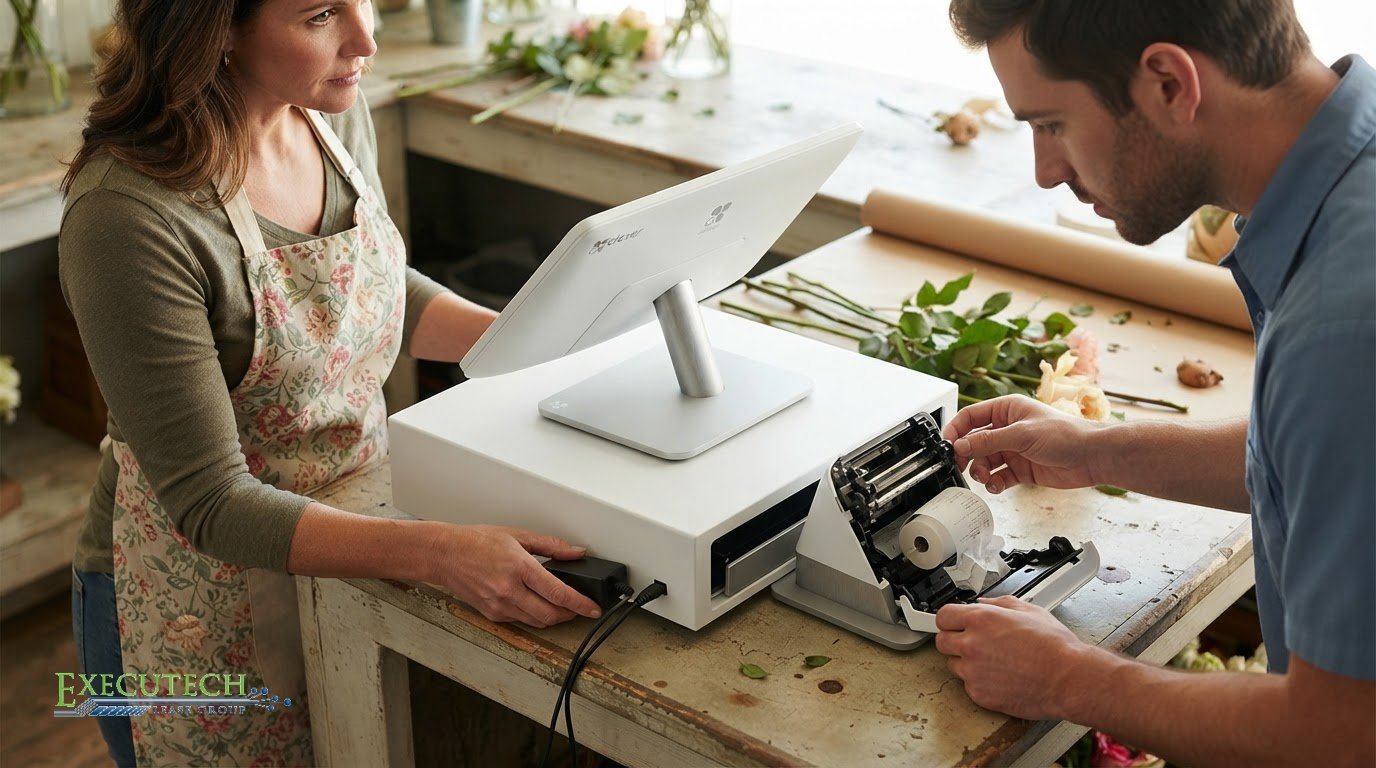
Who is responsible for repairs on leased equipment depends on the lease terms and the type of repair. The lessee commonly handles routine maintenance and damage caused by misuse or neglect. Responsibility for major failures from normal wear and tear varies by lease structure and agreement.
That distinction matters: routine service, accidental damage, and a worn component may each carry different repair responsibilities. The lease’s maintenance, warranty, and return provisions help determine who pays and what to do when equipment stops working.
This article explains how repair clauses allocate responsibility, what lessees typically maintain, and how normal wear differs from damage. It also covers payment-terminal and POS equipment leasing, so you can understand the terms before committing to a lease.
Key Takeaways
- Repair responsibility depends on the lease terms, the type of repair, and whether the problem stems from ordinary wear or damage.
- Understand which routine maintenance and service tasks fall to the lessee before equipment goes into use.
- Maintenance clauses can set repair procedures, deadlines, documentation requirements, and return-condition standards.
- A manufacturer’s warranty may cover certain defects, but it does not replace the lease’s maintenance obligations.
- Clear repair terms can help you assess equipment lease options for payment terminals and POS systems.
Major repairs and normal wear and tear
Who is responsible for repairs on leased equipment depends on the agreement, the type of lease, and the cause of the failure. A lessee is generally responsible for damage resulting from misuse, an accident, or neglect rather than normal wear and tear. The agreement may allocate major repairs caused by ordinary deterioration differently.
Damage and Wear-Related Repairs
Damage repairs address problems caused by an event or improper use; wear-related repairs address deterioration through ordinary operation. A component broken in an accident may be treated differently from a failure caused by age or prior use. Commercial tenants may also be responsible for repairing equipment serving their premises if the lease assigns them those costs.
For example, damage caused by an employee’s improper use may be the lessee’s responsibility. A major failure from normal wear may be treated differently under an operating lease than under a finance or capital lease. In either case, check the repair-cost clause and the stated cause of failure to determine who is responsible for repairs on leased equipment.
Routine Service and Normal Wear
Routine service is regular care that keeps equipment in working order; normal wear is deterioration from ordinary use. A lease may assign scheduled service to the lessee even if it treats a major wear-related failure differently. Following the maintenance schedule can also help distinguish ordinary use from neglect.
For instance, service records showing routine maintenance may help explain why a component failed despite proper care. A manufacturer’s warranty may cover a defect, but generally not routine care or problems caused by missed service. These records can help clarify who is responsible for repairs on leased equipment when a fault appears.
Responsibility for major repairs under an operating equipment lease can depend on the lease terms and the cause of the failure. Under a finance or capital equipment lease, the lessee typically assumes responsibility for wear-related failures and major mechanical repairs. The contract’s exact language controls.
Return standards also matter. A lease may require equipment to remain in good operating condition, allowing for reasonable wear and tear, and may require repairs to preserve its value and efficiency. At return, the equipment’s condition is compared with the standards in the agreement. A scratched panel from ordinary use may be treated differently from a screen cracked by impact.
Insurance can provide financial protection when covered damage occurs, but it doesn’t automatically determine who arranges or pays for repairs. The lease may require the lessee to carry insurance and provide proof when requested. Keep clear records of the incident, service, and repair to show how the damage relates to the lease terms.
Lessee responsibility for routine maintenance and repairs
Lease terms usually assign day-to-day upkeep to the lessee, while repair duties depend on the contract and the equipment problem.
Preventive Maintenance Responsibilities
Preventive maintenance is regular care that keeps equipment operating as intended. Follow the equipment manual and any maintenance schedule specified in the lease. These steps can help identify wear before it leads to a breakdown, while service records document the care the equipment received.
Unless the agreement includes routine maintenance, expect to pay for regular service items. A lease might require scheduled inspections or servicing; the specific tasks and timing depend on its terms. A finance lease may allocate responsibilities differently from a rental arrangement, so identify the applicable clause before arranging non-urgent work.
Routine Upkeep and Minor Repairs
Routine upkeep includes daily care and minor tasks needed to keep equipment in good working order. A rental company may set guidelines for minor repairs, and the agreement may assign those tasks to the renter. A payment terminal, for example, may require care according to its equipment instructions.
Normal wear doesn’t automatically mean the lessee must pay for every failure. The cause, lease language, and maintenance history all matter. Keep service receipts and note when an issue first appears; these records can help distinguish ordinary wear from damage or neglected upkeep.
Responding to Equipment Breakdowns
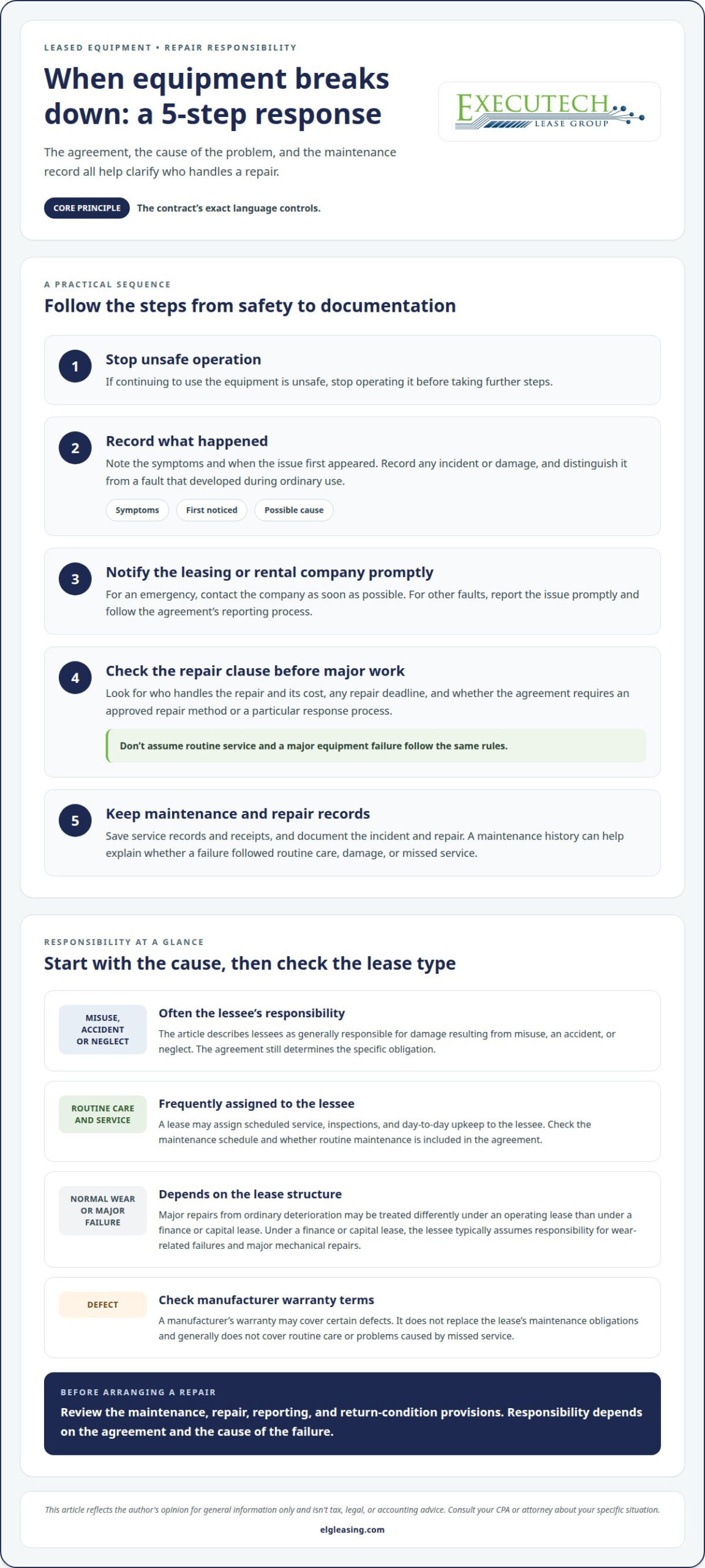
When leased equipment breaks down, stop unsafe operation, record the symptoms, and promptly notify the leasing or rental company. In an emergency, contact the company as soon as possible. Before arranging major repairs, check the agreement’s reporting process and any requirements for approved repair methods.
Washington’s landlord repair deadlines concern rental housing, not a general equipment-lease deadline. According to Washington State Legislature, landlords must begin repairs within 24 hours when a tenant loses hot or cold water, heat, or electricity, or faces a condition imminently hazardous to life. Washington’s routine repair timeline is 10 days for landlord-tenant repairs. Those timelines don’t establish who pays to repair leased business equipment.
For non-emergency equipment faults, report the failure promptly and preserve the maintenance records. The agreement may set a repair deadline or require a particular response process. For future equipment needs, you can start an application.
What Are Equipment Maintenance Clauses in Leasing Agreements?
Maintenance means routine care; repairs address a fault, breakdown, or damaged component. For leased equipment in the United States, the agreement generally allocates responsibility, with duties depending on the lease type and negotiated terms.
Maintenance and Repair Terms
A maintenance clause assigns upkeep tasks, while a repair clause explains who handles equipment failures and related costs. The wording matters because routine service and a major repair may involve different responsibilities.
Read the agreement for assigned tasks, deadlines, approved repair methods, and payment responsibilities. One clause, for example, may require the lessee to follow the operating manual and keep the equipment in good working condition; another may assign specific repairs to the lessor. Clear terms help identify responsibility when a failure results from missed service, misuse, or a mechanical fault.
Maintenance Records and Requirements
Maintenance records document the service performed, when it took place, and any repairs or parts replaced. They help show whether the lessee followed the agreement and the manufacturer’s maintenance requirements.
Keep invoices, service reports, and notes about recurring faults together. A record of scheduled electrical inspections, for example, may help explain a later equipment failure. Follow the manual’s service intervals and retain proof. Missing records can make it harder to show that a fault was unrelated to neglected upkeep.
Managing Maintenance Costs
Managing maintenance costs means reducing avoidable service needs and understanding which expenses the agreement assigns to you. Start by matching each maintenance task to the lease clause and equipment manual.
Use routine inspections to spot loose connections, unusual noises, or other early signs of trouble. Record small issues before they become larger failures. If the agreement requires approval before repairs, follow that process before authorizing work. This can help prevent disputes about costs or whether the work was permitted. A maintenance schedule also helps you plan service and keep up with required tasks.
Repair Costs and Lease Payments
A lessee generally can’t automatically subtract repair costs from scheduled lease payments. The agreement must allow that adjustment; otherwise, repair responsibility and payment obligations remain separate.
For example, if an electrical component fails and the lessee pays for an authorized repair, that payment doesn’t by itself change the next lease installment. Keep the repair invoice and follow the agreement’s claim or reimbursement process. If “deduct” refers to a tax deduction rather than reducing a payment, treatment depends on the lease structure; consult your CPA.
Defining repair obligations in the lease
Lease terms allocate repair duties between the equipment owner and the business using the equipment. The agreement, warranty terms, and lease structure all shape that allocation.
Equipment lessors aren’t automatically responsible for every repair. The agreement and any applicable manufacturer’s warranty help determine who handles a specific failure.
Lease-Based Repair Obligations
A repair clause identifies who arranges and pays for repairs during the lease. It matters because “maintenance” and “repair” can describe different tasks with separate responsibilities.
Review the clauses covering routine service, major failures, damage, emergency reporting, and approved repair methods. A contract may assign regular upkeep to the lessee while setting different terms for a major mechanical failure. The parties’ written allocation is more useful than assuming all equipment leases work the same way.
Leasing terms also vary by structure. Repair responsibility under an operating equipment lease can depend on the contract and the cause of the damage. Under a finance or capital lease, the lessee typically assumes responsibility for wear-related failures and major mechanical repairs. The specific contract still matters.
A triple-net lease generally concerns a tenant’s share of real estate taxes, insurance, and defined operating expenses, paid alongside base rent. It doesn’t automatically settle repair responsibility for separately leased equipment. A business might, for example, lease a POS terminal while occupying space under a triple-net premises lease. Those agreements cover different assets and obligations.
Warranty Coverage and Repair Duties
A manufacturer’s warranty may cover repairs when a covered component fails because of a defect during the warranty period. It can affect who pays for that particular repair, but it doesn’t replace the lease’s other duties.
Coverage depends on the warranty’s terms, including the components covered and applicable conditions. Routine care, normal wear, and problems caused by missed service generally fall outside factory warranty coverage. A defective internal component may qualify, for example, while damage from improper handling may not.
When a fault appears, record the symptoms, report the problem as required by the agreement, and determine whether the warranty applies before authorizing work. An emergency may require prompt reporting, while the lease may still specify approved repair methods. Keep warranty paperwork, service records, and repair documents together to help clarify responsibilities if the equipment is returned or a payment dispute arises.
Factory warranty coverage for defects
A factory warranty may cover a repair when a covered component fails because of a defect during the warranty period. The manufacturer provides that coverage, not the equipment lessor. A warranty may reduce the cost of an eligible repair, but it doesn’t automatically transfer the lessee’s other maintenance duties to the equipment owner.
Coverage depends on the manufacturer’s warranty terms, which identify covered components, exclusions, and claim conditions. A component that fails because of a manufacturing defect may qualify, for example, while damage caused by misuse may fall outside coverage. The warranty document determines what applies.
Routine care is separate. A factory warranty generally doesn’t cover scheduled service, normal wear and tear, or problems caused by missed maintenance. If an operator ignores the equipment manual’s care instructions and a failure follows, the manufacturer may reject the claim under the applicable terms. Keep service records to document the equipment’s maintenance.
The lease agreement still matters. It assigns responsibility for routine upkeep, reporting faults, and handling repairs not covered by the manufacturer’s warranty. A lessor’s ownership of the equipment doesn’t mean it provides warranty protection or agrees to pay every repair expense. If the lease makes the lessee responsible for a particular repair, an unsuccessful warranty claim doesn’t remove that contractual duty.
Use a clear process when equipment fails. Record the symptoms and date, keep relevant maintenance documents, and review the warranty’s claim requirements. Then follow the lease’s reporting and repair-approval terms before authorizing work, unless an immediate safety concern requires action. A defect claim may need manufacturer review, for example, while accidental damage may fall under a different lease or insurance provision.
Separate the three questions: Does the manufacturer’s warranty cover this defect? Who must report or arrange the repair under the lease? Who pays if coverage doesn’t apply? Answering each from the relevant document helps prevent warranty coverage from being mistaken for a general repair plan. Executech Lease Group doesn’t provide equipment warranties, maintenance, repairs, or replacements; warranty coverage comes from the manufacturer.
Check lease and warranty documents for maintenance duties, repair coverage, excess-wear terms, and return standards. The lease agreement may assign routine upkeep and responsibility for repairs not covered by the manufacturer’s warranty. The manufacturer’s warranty document explains which defects may qualify for coverage, along with exclusions and claim conditions. Review both documents to understand the applicable responsibilities.
Executech Lease Group (ELG Leasing): 12-60 Month Credit Card and POS Equipment Leases
Executech Lease Group (ELG Leasing) offers 12-60 month leases for credit card and POS equipment, including Clover devices. If your business needs payment-processing equipment and wants to spread its cost through a lease, these options are a relevant next step.
Leasing helps you acquire equipment; it doesn’t include repairs, maintenance, replacements, or a manufacturer’s warranty. The manufacturer provides any warranty coverage. Keep repair obligations separate from the financing decision, and review what the agreement assigns to you before choosing equipment.
The available structures reflect different ownership preferences. A lease-to-own program suits businesses seeking a path to ownership. A fair market value (FMV) lease is another structure, with terms set out in its agreement. The lease documents govern the specific arrangement, so don’t assume one option changes who handles a repair.
- Credit card and POS equipment leases: Consider these for terminals and point-of-sale systems used to accept payments.
- Lease-to-own programs: Consider this structure when eventual ownership is a priority.
- FMV lease options: Consider this structure when an FMV arrangement fits your equipment financing needs.
A merchant planning to deploy POS terminals can consider the equipment lease separately from its maintenance plan. An ISO or payment processor can also work with merchants seeking equipment through lease terms. Lease financing may be paired with installation and training offered by an ISO, but that doesn’t make repairs or warranty coverage part of the lease.
Before proceeding, identify the equipment your business needs and the lease structure that fits your ownership goals. Read the agreement’s repair and maintenance clauses alongside the manufacturer’s warranty documents. This keeps financing terms distinct from service obligations and clarifies your responsibilities during the lease.
Contact Executech Lease Group to discuss equipment leasing options for your business.
Choose your next equipment lease with clarity
Before you commit, clarify who is responsible for repairs on leased equipment under the specific agreement. Treat equipment financing and service planning as separate decisions. This helps you plan operations without assuming a lease includes maintenance, repairs, or warranty coverage.
Bring your equipment needs and ownership preference to the leasing conversation. Understanding the proposed structure helps you assess how it fits your workflow and budget, while the agreement sets out the terms you’ll accept. Keep manufacturer warranty information separate from lease responsibilities as you plan.
Make your next equipment decision with a practical view of financing and upkeep. Clear expectations support confident planning and help keep your business moving.
This article reflects the author’s opinion for general information only and isn’t tax, legal, or accounting advice. Consult your CPA or attorney about your specific situation.
Frequently Asked Questions
Who pays for repairs caused by normal wear and tear?
The lease agreement determines who pays for wear-related repairs. An operating equipment lease typically assigns major mechanical repairs caused by normal wear to the lessor, while a finance or capital lease typically places those costs on the lessee. A motor that fails through ordinary use may be treated differently from one damaged by mishandling. Identify the lease type and applicable repair clause before approving work.
Can a lessee be charged for repairs due to a manufacturer’s defect?
Yes, a lessee may still be responsible under the lease, but a manufacturer’s warranty may cover an eligible defect. Coverage depends on the warranty terms and whether the failure arose from a covered defect rather than misuse or missed maintenance. Preserve the service history and report the fault through the process required by the lease. A warranty claim and the lease’s payment duties are separate matters.
How do equipment repair responsibilities vary by state?
State rules can differ, but landlord-tenant repair requirements don’t automatically determine responsibility for separately leased business equipment. The equipment lease’s terms generally allocate maintenance, repair, and damage duties between lessor and lessee. A rule about a landlord-supplied appliance in a residence may not govern a business’s leased payment terminal, for example. Identify the transaction and equipment before applying a state rule.
This article reflects the author’s opinion for general information only and isn’t tax, legal, or accounting advice. Consult your CPA or attorney about your specific situation.

Article by
Robert Ensminger
Robert Ensminger is the founder and CEO of Executech Lease Group (ELG Leasing), which specializes in equipment leasing and financing solutions for the merchant-services, payments, POS, and FinTech industries. With more than 20 years of industry experience, Robert helps ISOs, payment processors, POS providers, and software companies build practical equipment leasing programs. He founded ELG in 2010. His work focuses on responsive service, transparent program structures, subscription and SaaS-monetization programs, and helping ELG’s partners close more business while creating sustainable revenue.