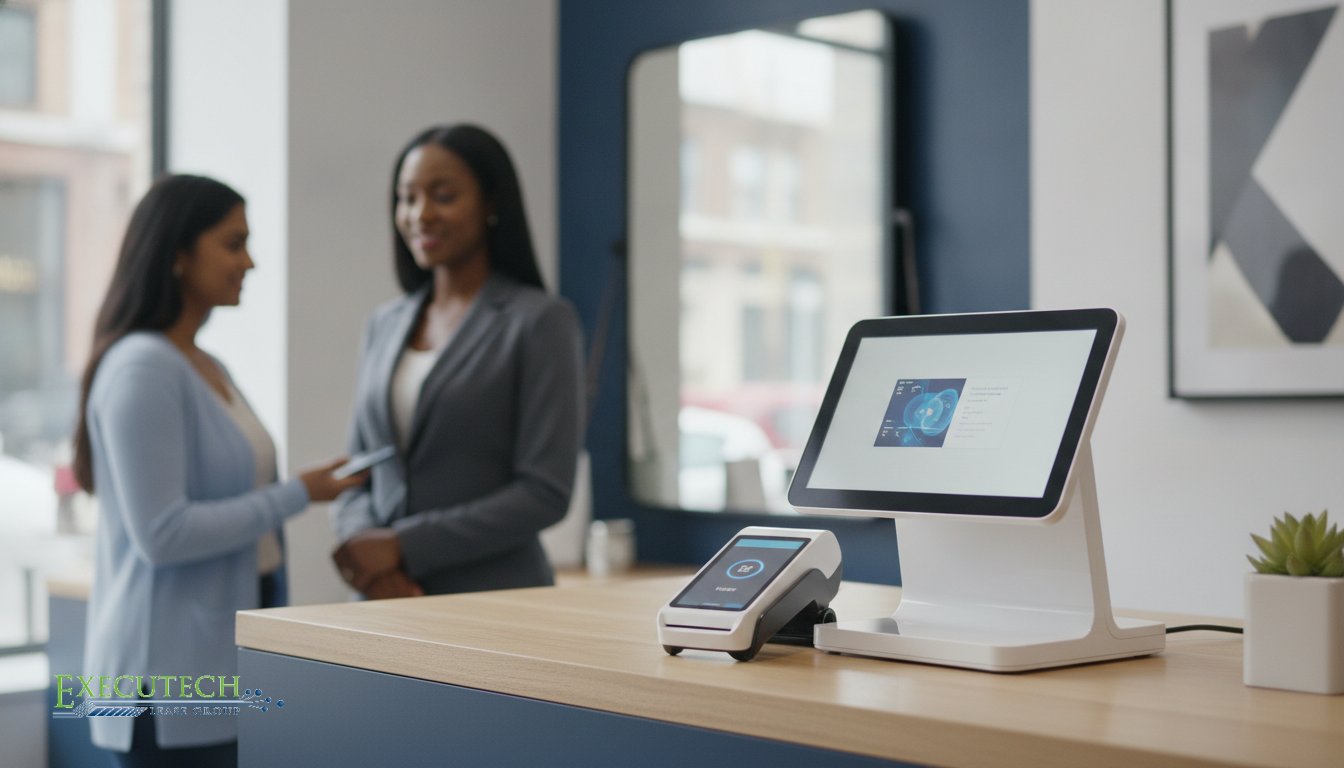
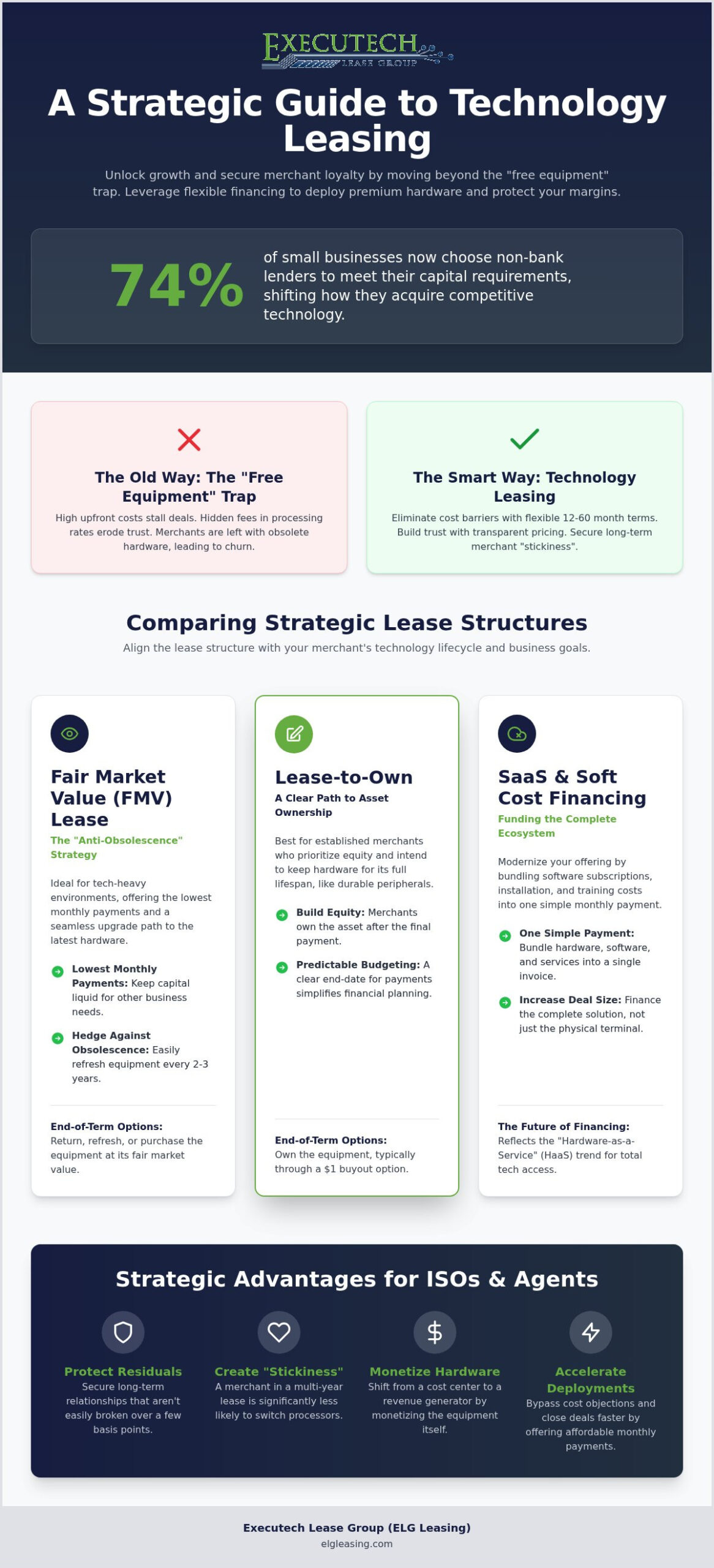
Seventy-four percent of small businesses now choose non-bank lenders to meet their capital requirements. This shift isn’t just a trend; it’s a fundamental change in how merchants acquire the tools they need to stay competitive. You’ve likely seen high upfront equipment costs stall a deal or watched a merchant leave because their hardware became obsolete. It’s a common frustration. Technology leasing for merchant providers solves these bottlenecks by removing the financial barrier to entry and securing long-term merchant stickiness through modern hardware deployments.
We understand that your goal is growth without the logistical headache. This guide explores how to leverage flexible 12-60 month leases to scale your operations and increase residuals through equipment monetization. You’ll learn the mechanics of FMV and lease-to-own programs that make premium systems like Clover accessible to every merchant in your portfolio. We’re moving past the era of clunky, expensive hardware purchases. This is about streamlined efficiency and predictable revenue. We will break down how to integrate these financial tools to protect your margins and eliminate the complexity of hardware management for good.
Key Takeaways
- Move beyond the “free equipment” trap to protect your margins with transparent, high-standard financial structures.
- Leverage technology leasing for merchant providers to deploy premium hardware like Clover while eliminating the friction of upfront costs.
- Compare the strategic advantages of FMV, Lease-to-Own, and SaaS subscription leases to match your clients’ specific technology cycles.
- Secure long-term merchant retention and increase residuals by integrating equipment monetization into your standard sales process.
- Identify the critical criteria for selecting a leasing partner that offers national coverage and seamless hardware logistics.
The Evolution of Technology Leasing for Modern Merchant Providers
Technology leasing for merchant providers has evolved into a high-stakes financial strategy. By 2026, the payment landscape moved beyond simple card swiping. Merchants now require cloud-based ecosystems that manage inventory, AI-driven sales forecasting, and real-time data analytics. A standard finance lease provides the framework for these complex deployments. It’s no longer just about the hardware on the counter. It’s about the digital infrastructure that keeps a business running.
The “free equipment” model is losing its grip on the industry. Merchants recognize that “free” often hides inflated processing rates and legacy hardware that lacks modern security. Modern technology leasing for merchant providers offers a superior alternative. It separates the cost of the equipment from the processing fees. This clarity builds immediate trust. You position yourself as a transparent partner rather than a vendor hiding costs in the fine print.
The Move Toward Ecosystem-Based Financing
Merchants today prioritize integrated software over standalone terminals. They need a system that connects their front-of-house tablets with back-office management tools. Leasing makes this holistic approach possible. It allows you to fund not just the terminal, but the peripherals, networking gear, and SaaS components as well. This reflects the growing “Hardware-as-a-Service” (HaaS) trend. Businesses want to access premium tech like Clover without the heavy capital expenditure. You can view our specialized leasing programs to understand how these bundles are structured for maximum efficiency.
The Strategic Advantage for ISOs and Agents
Upfront costs are the primary deal-killer in merchant services. When you offer 12-60 month terms, you bypass that objection entirely. You aren’t just a salesperson; you’re a modern facilitator of technology. This strategy creates merchant “stickiness.” A business committed to a multi-year lease on a high-end POS is significantly less likely to switch processors for a few basis points. You protect your residuals while helping your clients modernize. It’s a calculated move that rewards the ISO and the merchant alike. By shifting the conversation from price to value, you accelerate your deployment speed and monetize the hardware itself.
Comparing Strategic Lease Structures: FMV, Lease-to-Own, and SaaS
Choosing the right financial instrument is a prerequisite for a successful deployment. Technology leasing for merchant providers isn’t a monolith. You must align the lease structure with the merchant’s operational goals and the specific lifecycle of the technology being deployed. Whether your client is a high-volume retailer or a specialized service provider, the distinction between Fair Market Value (FMV) and Lease-to-Own dictates their long-term ROI. One path offers flexibility. The other offers ownership. Both are tools to accelerate your sales cycle.
Fair Market Value (FMV) vs. Lease-to-Own
FMV leases are the gold standard for tech-heavy environments. They offer the lowest monthly payments. They also provide a seamless upgrade path. In an era where POS hardware becomes legacy in under three years, the ability to return equipment or refresh it at the end of the term is vital. Organizations like the Equipment Leasing and Finance Association emphasize that FMV structures allow businesses to hedge against obsolescence while keeping capital liquid. It’s the ultimate “anti-obsolescence” strategy.
Lease-to-Own programs serve a different purpose. These are ideal for established merchants who prioritize equity. They want to own their terminals at the end of the 12-60 month term. A $1 buyout option is the most common path here. It provides the merchant with a clear end-date for their payments. This structure works best for hardware with longer lifespans or for merchants with highly stable operations. It’s a straightforward path to asset ownership.
Financing Cloud-Based SaaS and Soft Costs
Financing is no longer limited to physical assets. The industry is seeing a massive shift toward SaaS Programs that bundle software subscriptions into the lease. This addresses the soft cost gap that many competitors ignore. By financing the software alongside the hardware, you reduce the total cost of ownership for the merchant. It simplifies their monthly accounting into a single line item. This is a game-changer for ISOs looking to increase deal size.
Subscription leases allow you to monetize the entire ecosystem. You aren’t just selling a terminal. You’re selling the cloud-based brain of the business. This approach eliminates the friction of separate software bills. It creates a single, manageable payment that covers everything from the Clover device to the specialized inventory software running on it. Matching these structures to specific verticals is a strategic necessity:
- Quick Service Restaurants: FMV leases are best for high-wear environments requiring frequent hardware refreshes.
- Professional Services: Lease-to-Own works well for low-traffic environments where terminals last longer.
- Retail Ecosystems: SaaS bundles are essential for managing complex inventory software costs.
If you’re ready to modernize your offering, you can streamline your next deployment with our specialized financial tools.
Analyzing the Financial Impact: Residuals, Retention, and ROI
Financial stability for merchant providers relies on protecting residuals from the erosion of “free equipment” churn. The industry is currently saturated with low-margin processing offers that provide generic terminals at no cost. This creates a race to the bottom that destroys portfolio value. Technology leasing for merchant providers breaks this cycle by decoupling the hardware investment from the processing rate. It allows you to monetize the hardware layer while maintaining competitive processing fees. This isn’t just about an extra fee; it’s about building a sustainable, high-margin portfolio that resists competitor poaching.
Merchants often explore various funding avenues, such as the SBA 7(a) loan program, to manage their capital requirements for growth. However, the complexity and long lead times of government-backed loans often make them impractical for rapid technology deployments at the point of sale. Leasing offers the speed and specificity that traditional bank loans lack. It provides a direct path to premium hardware without the administrative friction of a federal loan application. This efficiency translates directly into a faster ROI for your deployment teams. You can get merchants processing on high-end hardware in days rather than months.
Enhancing Merchant “Stickiness”
A leased Clover Station Duo creates a significantly higher barrier to exit than a generic terminal. When a merchant commits to a multi-year technology investment, their loyalty shifts from the price of a transaction to the value of the entire ecosystem. The psychological impact of this investment is profound. Merchants view the hardware as a core business asset, not a disposable utility. This alignment of interests ensures they stay in your portfolio longer. You aren’t just a service provider anymore; you’re the engine behind their operational success. Retention rates for merchants on premium leased hardware are historically higher than those on “free” legacy terminals.
Residual Protection and Revenue Growth
The most common objection is that leasing is just an extra cost for the merchant. You must reframe this as a strategic investment. Leasing is a powerful tool for business modernization that pays for itself through increased efficiency. It turns the hardware layer into a profit center through strategic financing. By leveraging the benefits of professional technology leasing for merchant providers, you protect your residuals from the volatility of the processing market. A high-end POS system like Clover increases merchant longevity and transaction volume. This longevity is the most critical factor in your long-term revenue growth. You monetize the equipment upfront and enjoy stable residuals for the duration of the contract term.
Implementation Framework: Deploying a Scalable Leasing Program
Scaling technology leasing for merchant providers requires more than just a finance partner. It requires a strategic alignment with an entity that understands the ISO lifecycle. You need a partner that offers national coverage and manages the complex logistics of hardware deployment. Vetting should focus on approval speed, transparency, and the ability to handle high-volume sales without friction. Don’t settle for a vendor that treats hardware as an afterthought. Your partner must be a gatekeeper of quality that simplifies your operational burden.
The Sales Integration Strategy
Successful ISOs reframe the conversation. Instead of leading with basis points, lead with technology. Train your agents to present leasing as a sophisticated cash flow management tool. This allows merchants to preserve their working capital for inventory or marketing while accessing premium POS systems immediately. You can use ELG Leasing Programs to build customized offers that fit specific merchant needs. Your sales collateral should clearly contrast the low monthly cost of a lease against the high upfront hit of a purchase. This shift in focus moves the merchant from a “cost” mindset to an “investment” mindset.
Automating the Approval Workflow
Friction is the enemy of the sale. In 2026, a 24/7 digital application portal is a requirement, not a luxury. You need to move from a quote to hardware deployment in record time to prevent merchant second-guessing. A streamlined workflow ensures that your agents spend more time selling and less time chasing paperwork. Decisive action is rewarded in this industry. For a deeper dive into the technical requirements of these structures, see our sibling article on The Comprehensive Guide to POS Equipment Leasing. Speed is your greatest competitive advantage.
Managing the end-of-term transition is where true retention happens. Don’t wait for the lease to expire. Proactively engage merchants six months before the term ends to discuss hardware refreshes. This creates a continuous cycle of modernization that keeps your merchants on the cutting edge and keeps them in your portfolio for decades. It’s about building a well-oiled machine that scales automatically. By automating these touchpoints, you ensure your portfolio remains modern without constant manual intervention.
Why ELG Leasing is the Strategic Choice for Merchant Providers
Choosing a partner for technology leasing for merchant providers is a high-stakes decision. You need more than a bank; you need a gatekeeper that understands the nuances of the ISO world. ELG Leasing operates within the Executech ecosystem, bringing over a decade of specialized industry expertise to every deal. We don’t claim to be for everyone. We value quality and professional transparency over sheer volume. This selectivity fosters a secure environment where partnerships thrive on mutual trust and streamlined execution. We provide the financial backbone that allows you to deploy Clover systems, SaaS solutions, and traditional terminals with unwavering confidence.
The ELG Advantage: Speed and Flexibility
Speed defines your success in the 2026 market. Our 12-60 month terms are built to mirror modern business cycles, allowing merchants to access premium hardware without the friction of outdated financial structures. You won’t deal with layers of bureaucracy here. We provide direct access to decision-makers for complex ISO deals, ensuring that your most important opportunities aren’t stalled by red tape. Red tape kills deals. This accessibility is the core of Why ELG remains the preferred choice for high-standard providers. We monetize the equipment layer while you focus on scaling your portfolio. It’s a clean, efficient process designed for the modern professional.
Building for the Future of Payments
Technology moves fast. From AI-integrated POS systems to cloud-based SaaS solutions, the hardware layer is constantly shifting. ELG adapts to these emerging trends with a commitment to efficiency. We support traditional terminals and modern ecosystems with equal precision. Our no-nonsense financial structures eliminate the ambiguity that often plagues the leasing industry. We provide the stability you need to navigate a dynamic payments landscape. It’s about getting the job done with minimal friction and maximum impact. We don’t hide costs or complicate the flow. We deliver the results your business demands.
A selective partnership with a specialized leasing arm is a strategic asset. It protects your residuals and secures your merchant relationships for the long term. You get a partner that understands the intersection of finance and technology, moving away from cumbersome, old-fashioned methods. We focus on the end goal: getting your clients what they need so you can grow. Your success is built on the reliability of your tools and the strength of your partners.
Future-Proof Your Merchant Portfolio with Strategic Leasing
The payment landscape is moving fast. Relying on “free equipment” or outdated legacy hardware is a recipe for merchant attrition and shrinking margins. Technology leasing for merchant providers offers the clarity and flexibility needed to deploy premium systems like Clover without draining merchant capital. By leveraging 12-60 month flexible lease terms and specialized SaaS financing, you position your ISO as a modern facilitator of technology. This shift moves you away from price-based competition and toward value-driven partnerships.
You’ve already explored how FMV and lease-to-own structures protect your residuals and foster long-term merchant loyalty. Now is the time to monetize your hardware layer and automate your approval workflows for maximum efficiency. We provide the industry-leading ISO support and professional transparency required to scale your deployments with precision. Eliminating the financial friction of upfront costs isn’t just a sales tactic. It’s a fundamental strategy for building a high-margin portfolio that resists competitor poaching. You get the tools to grow, and your merchants get the technology they need to thrive.
It’s time to eliminate the complexity of hardware logistics and focus on growing your residuals. We’re ready to help you accelerate your momentum and secure your future in the 2026 digital economy. Let’s build something better together.
Frequently Asked Questions
What is the difference between an FMV lease and a lease-to-own program for POS?
FMV leases prioritize flexibility and lower monthly costs by allowing you to return or upgrade hardware at the end of the term. This is ideal for technology with short lifecycles. In contrast, a lease-to-own program is designed for merchants who want to build equity in their equipment. At the end of the 12-60 month term, the merchant typically owns the hardware outright. Both structures are essential components of technology leasing for merchant providers.
Can I lease cloud-based SaaS software along with my POS hardware?
Yes, you can lease cloud-based SaaS software along with your physical hardware. We specialize in financing soft costs and subscription-based POS software models to provide a complete solution. This allows ISOs to bundle the entire technology ecosystem into one manageable monthly payment for the merchant. It eliminates the friction of multiple bills and ensures the software costs are spread over the life of the lease, just like the terminals themselves.
How long are the typical lease terms for credit card terminals?
Typical lease terms for credit card terminals range from 12 to 60 months. This range provides the flexibility needed to match the merchant’s cash flow requirements and the expected lifespan of the technology. Shorter terms are often used for basic terminals with rapid turnover. Longer terms, such as 48 or 60 months, are frequently applied to more complex, high-end POS systems that require a larger initial investment but offer long-term operational value.
What happens at the end of a 48-month POS equipment lease?
At the end of a 48-month lease, the outcome depends on the specific contract structure chosen at the start. If the merchant has a Fair Market Value (FMV) lease, they can return the equipment, upgrade to the latest technology, or purchase it at its current market price. If they are in a lease-to-own program, they generally take full ownership of the hardware. This transition is a critical time for ISOs to initiate hardware refresh cycles.
Is leasing or buying better for a growing merchant provider?
Leasing is generally the superior choice for growing providers because it preserves liquid capital for other operational needs. Buying equipment outright creates a heavy upfront financial burden that can stall growth. Technology leasing for merchant providers allows you to scale hardware deployments quickly without depleting your cash reserves. It also protects you from being stuck with obsolete hardware as the payment industry continues to evolve and introduce new security standards.
How do POS leases impact my merchant residuals as an ISO?
POS leases protect your residuals by creating a higher barrier to exit for the merchant. When a merchant is committed to a technology lease, they are significantly less likely to switch processors for minor rate differences. This stickiness ensures your residual stream remains stable over several years. Additionally, leasing allows you to monetize the hardware layer independently, preventing you from having to hide equipment costs within the merchant’s processing fees.
Does ELG Leasing support Clover device financing for all models?
Yes, we provide comprehensive support for Clover device financing across various models. Our programs are specifically tailored to handle the unique requirements of the Clover ecosystem, including both the hardware and associated software components. Whether your merchants need mobile solutions or full countertop stations, we offer the flexible terms and transparent structures required to get these premium devices into their hands quickly. This specialized focus helps ISOs close more high-value deals.
How fast is the approval process for a technology lease?
The approval process is designed for maximum speed and streamlined efficiency. We utilize digital application portals to move from the initial quote to hardware deployment in record time. While specific durations depend on the complexity of the deal, our focus remains on reducing friction for both the ISO and the merchant. This rapid turnaround allows you to secure the merchant’s commitment and start the installation process without the delays typical of traditional bank financing.

Article by
Robert Ensminger
Robert Ensminger is the founder and CEO of Executech Lease Group (ELG Leasing), which specializes in equipment leasing and financing solutions for the merchant-services, payments, POS, and FinTech industries. With more than 20 years of industry experience, Robert helps independent sales organizations, payment processors, POS providers, and software companies develop practical leasing, subscription, and SaaS-monetization programs. He founded ELG in 2010 and guided the company to recognition on the Inc. 5000. His work focuses on responsive service, transparent program structures, and helping ELG’s partners close more business while creating sustainable revenue.