What if changing payment processors doesn’t require ending your terminal lease? If you’re asking, “can I switch payment processors if my terminal is leased,” the answer depends on two separate agreements and whether your specific equipment can work with the proposed processing setup. A processing change doesn’t automatically cancel a lease, and a lease doesn’t necessarily lock you into the same processor.
It’s reasonable to wonder whether the agreements share a term, whether your terminal can be used with another processor, or whether a change could disrupt payments. Start by separating the equipment obligation from the processing relationship. Your lease may continue after processing changes, so review its term and obligations alongside the processing agreement’s provisions on ending or changing service.
This article explains which documents to review, what to establish about terminal compatibility, and how to organize the transition without assuming your current hardware will work with every processor. You’ll also see how a leased terminal differs from equipment provided as part of a processing arrangement. With those details clear, you can make a coordinated decision about processing and equipment without treating them as one contract.
Key Takeaways
- Wondering “can I switch payment processors if my terminal is leased”? The answer depends on your agreements and whether the specific terminal works with the proposed setup.
- Compare the lease, current processing agreement, and proposed processing setup side by side. Record dates, equipment terms, and questions that still need an answer.
- Plan the transition by mapping lease obligations separately from processing changes, then address compatibility before switching.
- A leased terminal may remain your responsibility even as your processor changes. Understand the equipment terms before making a move.
- Executech Lease Group (ELG) arranges payment-processing equipment leases. Payment processing is a separate relationship.
Can I Switch Payment Processors If My Terminal Is Leased?
Yes, you may be able to change processors while a terminal lease is active, but the processor change alone doesn’t determine what happens to the lease. The answer to can I switch payment processors if my terminal is leased depends on the signed agreements and whether the terminal can be used with the proposed processing setup. Treat those as separate questions, not one bundled decision.
Payment processing covers transactions; equipment leasing covers the leased hardware and the obligations in its lease. A processor handles the transaction relationship, while a lease sets out the equipment arrangement. Neither relationship automatically determines the term or conditions of the other. Keeping this distinction clear helps you identify which document applies to each question.
A common mistake is assuming that changing one provider automatically ends, transfers, or alters the other agreement. The signed documents, not an assumed connection between their timelines, are the starting point. Review each separately, then coordinate the details before making a change.
What does a payment-processing agreement cover?
This agreement describes the merchant’s relationship for processing transactions. Review the stated term and any sections about ending or changing services or about equipment. Record the exact wording and dates rather than assuming the arrangement renews, ends, or changes in a particular way. Equipment references matter too: they can help show whether the terminal is addressed in the processing relationship or in a separate document.
What does a terminal lease cover?
A terminal lease is a separate equipment agreement. It sets out the lease term and obligations associated with the leased hardware. Switching processors doesn’t, by itself, explain or erase those responsibilities. Review the lease for its own dates and equipment language, and keep it separate from the processing agreement as you consider a transition.
For example, your processing agreement might refer to one service term while the lease lists a different equipment term. That difference doesn’t establish a conflict or determine what either agreement permits. It means you should assess each document on its own terms. Note the named equipment, stated dates, and any language connecting the terminal to processing services. If a clause is unclear, flag it for appropriate review before making a decision.
Keep the questions distinct: What does the processing agreement say about changing services? And what does the lease say about the equipment obligations? Once you’ve reviewed both, assess terminal compatibility and plan the switch without assuming that one contract automatically resolves the other.
How a Leased Terminal and Payment Processor Work Together
Having a terminal in your business doesn’t automatically mean it can process payments through any provider. Physical possession and technical compatibility are separate issues. The lease concerns the equipment arrangement; the processing setup depends on whether the specific device and its configuration work with the proposed provider. Keep those questions separate as you assess a change.
Compatibility must be established for the specific device and intended processing setup. The model, software, configuration, and processor requirements can all matter. A familiar-looking device or a connection that appears to fit doesn’t prove it will function in the new setup. If you’re asking, “can I switch payment processors if my terminal is leased,” start by identifying the exact terminal and its configuration, then assess compatibility separately from the lease.
Why the same terminal may not automatically work
Payment terminals aren’t interchangeable based on appearance alone. Two devices that look similar may differ in model or configuration, and the software may be set up for a particular processing arrangement. Having the device on hand doesn’t show whether it can be configured for another provider or whether it meets that provider’s requirements.
Before relying on existing hardware, gather its model and configuration details and compare them with the written requirements for the proposed processing setup. General information about terminal reprogramming is not confirmation that your particular device will work. The practical question is whether this specific terminal, in its current configuration, fits the intended arrangement.
Which questions belong to which relationship?
Separate the questions so a technical issue doesn’t get confused with a lease obligation. Each relationship addresses different details:
- Lease: Check the signed lease for its stated term, payment obligations, and end-of-term language.
- Processing setup: Review the proposed service arrangement and the terminal requirements provided for setup.
- Compatibility: Determine whether the terminal’s model and configuration fit those requirements. Don’t infer compatibility from a product image or a general connection type.
A “yes” on one point doesn’t settle the others. A lease may explain your equipment obligations without establishing technical compatibility. A workable processing configuration doesn’t, on its own, explain the lease’s terms.
Executech Lease Group (ELG) arranges equipment leasing for payment-processing equipment. ELG doesn’t process payments or control a processor’s requirements or obligations. If you’re a merchant-services vendor or other partner exploring equipment leasing, use the vendor inquiry form to start that separate conversation. Keep the device assessment and lease review distinct as you plan your next steps.
What to Compare Before Changing Processors with a Leased Terminal
Build a side-by-side comparison before committing to a transition. It helps separate the dates and obligations written into each agreement from the technical questions about using your specific terminal. If you’re asking, “can I switch payment processors if my terminal is leased,” this comparison won’t decide the outcome, but it will show what needs clarification before you plan the change.
| Lease | Current processing agreement | Proposed processing setup | Open questions |
|---|---|---|---|
| Record the stated term, payment obligations, equipment description, and end-of-term language. | Note the stated term and any wording about ending services, notice, or supplied equipment. | Capture the proposed service arrangement and the terminal requirements provided for setup. | Do the documents describe separate terms? Is any relevant wording unclear? |
| Write down the exact terminal make and model shown in the equipment documentation. | Record any references to device configuration or equipment connected to processing. | List configuration or integration details relevant to the intended use. | Can this specific device and configuration be used in the proposed setup? |
Compare obligations without treating contracts as interchangeable
Use the signed equipment agreement to record the lease term and payment obligations. Then review the processing agreement separately for its own stated term and any language relevant to changing providers. Don’t assume matching dates mean matching conditions, or that different dates signal a conflict. If a clause is unclear, flag it for appropriate contract review rather than drawing a legal conclusion from a summary.
Keep your notes factual. Write down dates exactly as stated and identify the document each date comes from. This creates a clear comparison without treating a processor’s service terms as a substitute for the lease language, or vice versa.
Compare terminal use without assuming portability
Take the make and model from the equipment documentation, not from memory or appearance. Add any known configuration or integration details relevant to the intended setup. The lease can help identify the equipment, but it doesn’t establish that a processor supports it. Keep compatibility as a separate open item tied to the particular device and proposed configuration.
Use the final column as a working list, not a prediction. Separate confirmed details from unresolved ones, and note which document or written setup information can clarify each question. A lease term belongs to the equipment agreement. Device requirements belong to the proposed processing setup. Keeping those categories distinct makes the transition plan more practical, whether it points toward using the existing terminal or evaluating another setup.
How to Plan a Processor Switch While You Still Lease the Terminal
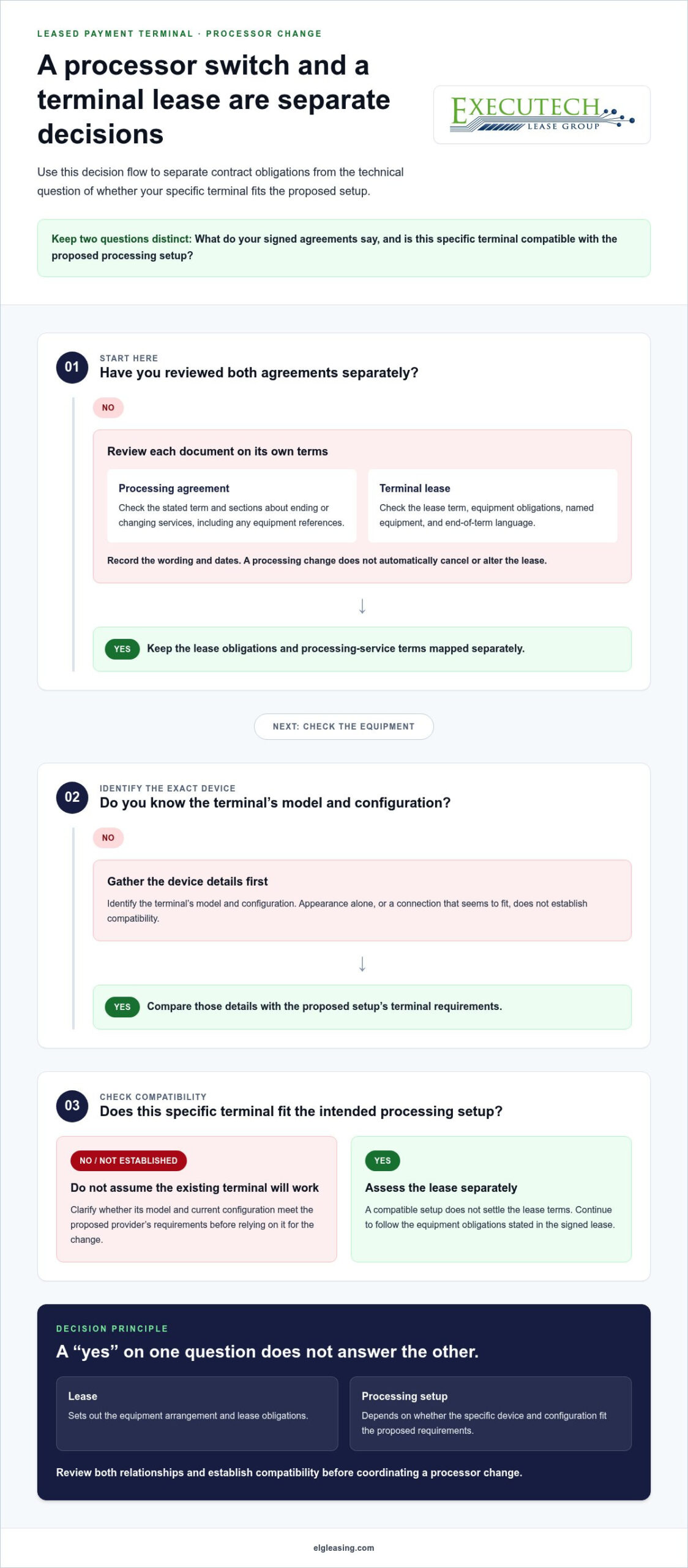
A clear sequence helps you coordinate a processing transition without losing sight of the equipment agreement. If you’re considering whether can I switch payment processors if my terminal is leased, work through the documents, device details, and transition plan as separate checkpoints. Keep written records as you go so you can see what’s established and what still needs clarification.
- Gather the agreements. Locate the signed equipment lease and current processing agreement. Include documents that describe the terminal or refer to the equipment. Start with the signed versions so you’re working from the actual terms, not recollection or informal summaries.
- Map lease dates and obligations. Record the lease’s stated term, payment obligations, equipment description, and end-of-term language. Keep these notes in a section of your transition plan dedicated to the lease. Don’t assume that the processing agreement’s end date changes the lease’s stated terms.
- Map processing-service details separately. Note the processing agreement’s stated term and the clauses or dates relevant to changing services. Keep those details distinct from lease dates. If either document uses unclear language, mark it for appropriate review rather than assuming what it means.
- Identify the terminal precisely. Use the equipment documentation to capture the exact make and model. Add known configuration or integration details relevant to the intended setup. A general device description isn’t enough to establish that the terminal will work with another processing arrangement.
- Resolve compatibility before relying on the device. Treat compatibility as a separate planning checkpoint. Compare the device-specific details with the written requirements for the proposed setup, and record what those requirements establish. Don’t treat the lease as confirmation of technical compatibility or plan around the existing terminal until its intended configuration is clear.
- Set out the transition sequence. Note the expected processing-service change steps and dates separately from the lease schedule. Identify unanswered questions that could affect the handoff, and keep a record of relevant documents and decisions. This helps you plan for continuity without assuming a particular outcome or timing.
Keep the lease in your planning unless its own terms state otherwise. That doesn’t decide whether the processor change is possible; it ensures the equipment agreement remains visible while you coordinate the processing transition. A simple record of the document name, review date, key terms, and open questions can keep both workstreams organized.
Where Equipment Leasing Fits Into a Processor Change
A processor change and an equipment lease relate to the same payment setup, but they serve different purposes. Executech Lease Group (ELG) arranges equipment leasing for payment-processing equipment. ELG doesn’t process payments, supply merchant accounts, or set transaction pricing. Keeping those roles distinct helps you direct each question to the right agreement and relationship.
For a merchant, the practical takeaway is straightforward: assess the lease on its own terms while evaluating the processor change separately. A lease doesn’t establish whether a particular terminal will work with a proposed processor, and a processor change doesn’t, by itself, settle what the lease requires. Keep both workstreams in view without treating them as one arrangement.
What an equipment leasing relationship does and doesn’t mean
ELG’s role is equipment leasing, not payment processing. ELG doesn’t control processor obligations or guarantee that leased hardware can move to another processing setup. Device compatibility remains a separate, device-specific question. For a new equipment arrangement, compare the lease structure and equipment terms in the equipment lease program options with your business needs. The lease terms relate to the equipment arrangement, not the processing-service term.
ELG’s equipment lease terms are 12, 24, 36, 48, or 60 months. That timeframe describes equipment leasing, not a merchant account or payment-processing commitment. If you’re reviewing an active lease while considering a processor change, use the signed lease to understand its stated term and obligations. Use the processing agreement and proposed setup to review service-transition details and device requirements. Keeping those records distinct makes it easier to see which questions concern equipment and which concern transaction services.
This separation also sets realistic expectations. A leasing relationship isn’t a compatibility determination, a merchant account, or a decision about what a processor’s agreement requires. Likewise, a processor’s technical requirements don’t rewrite the lease. Build the transition plan from the relevant documents and device-specific information, rather than relying on assumptions about what one party controls.
When a merchant-services partner wants to discuss ELG
ELG works with merchant-services vendors, independent sales organizations (ISOs), merchant service providers (MSPs), and related sales partners on equipment leasing. That partner relationship is separate from a merchant’s processor agreement. The vendor inquiry form is a contact step for partners, not a merchant financing application or a credit decision.
If you’re a merchant, focus on your signed lease, processing agreement, and proposed terminal setup. If you’re a merchant-services partner exploring an equipment-leasing relationship, use the vendor inquiry route. In either case, evaluate the equipment lease independently from the processor change, then coordinate the practical details without assuming that compatibility or contract terms transfer automatically.
Make Your Next Step a Documented Decision
The question “can I switch payment processors if my terminal is leased” becomes easier to act on when your next step is a documented decision, not a guess. Before scheduling a change, turn your review into a short transition record: what remains unresolved, who owns each follow-up, and what information you need before proceeding. That gives your team a clear reference point if the proposed setup or agreement details change.
Set a decision checkpoint before making operational changes. At that point, review the outstanding items together and decide whether you have enough information to proceed or need further clarification. Keep the record accessible to the people responsible for the equipment and processing transition. Clear ownership helps prevent assumptions from becoming last-minute obstacles.
Merchant-services vendors, ISOs, and MSPs exploring equipment-leasing relationships can take a separate next step through ELG’s vendor inquiry process.
A deliberate plan helps you move forward with a clearer view of the lease, the processing relationship, and the unresolved setup questions. To compare equipment lease structures, review ELG’s leasing programs.
Frequently Asked Questions
Does ELG process payments?
No. ELG does not process payments. Its equipment-leasing role is separate from payment processing. For a processor switch, treat transaction services, merchant-account arrangements, and equipment leasing as separate workstreams. A question about transaction pricing belongs to the processing relationship, while a question about the leased terminal’s obligations belongs to its lease. ELG doesn’t set transaction pricing or control processor obligations.
Does no-money-down leasing mean there are no payments?
No. ELG offers no-money-down equipment leasing. That does not mean the equipment is free or that there are no ongoing lease obligations. Review the payment schedule and stated terms in the signed document. A processor change may affect your transaction setup, but don’t mistake that change for a change to the lease payment schedule.
How fast does ELG make a credit decision?
ELG provides credit decisions in 1-2 business hours. Keep that separate from the funding and equipment-deployment stages. This decision timeframe doesn’t promise approval or establish when equipment will be delivered or installed. If you’re coordinating a processor transition, don’t use the decision window as a terminal deployment date. Keep credit review, equipment deployment, and processing activation as separate milestones.
How do ELG’s FMV and lease-to-own buyouts differ?
ELG’s FMV option ends with about a 10% buyout. Its lease-to-own option ends with a $1 buyout. Those are end-of-lease figures, not monthly payments or the total equipment price. When comparing the options, identify the lease type in the agreement and read its end-of-term language in that context. Don’t apply one option’s buyout to the other.
Can I lease another terminal while my current terminal lease is active?
Whether another equipment lease can be arranged alongside an active one depends on the equipment plan and agreements involved. Keep any new equipment arrangement separate from the processor decision, and track the existing and proposed lease terms independently. ELG’s vendor inquiry form is a contact step for merchant-services partners, not a merchant financing application or a credit decision.
Does a faster credit decision mean my replacement terminal will arrive in that timeframe?
No. A credit decision timeframe doesn’t establish when equipment will be funded, delivered, or installed, or when a terminal can process transactions. Those are separate stages. Avoid setting a processor cutover date based only on a credit decision. Account for the equipment-deployment timeline and processing setup separately, then coordinate the transition dates based on the information available for each stage.
Who provides a warranty or repairs for leased equipment through ELG?
ELG doesn’t provide equipment warranties, maintenance, repairs, or replacements. Any equipment warranty comes from the equipment manufacturer. If a terminal needs attention during a processor transition, keep the manufacturer’s warranty information separate from the lease and processing documents. An ELG equipment lease doesn’t provide repair or replacement coverage; review the manufacturer’s information for warranty details.

Article by
Robert Ensminger
Robert Ensminger is the founder and CEO of Executech Lease Group (ELG Leasing), which specializes in equipment leasing and financing solutions for the merchant-services, payments, POS, and FinTech industries. With more than 20 years of industry experience, Robert helps independent sales organizations, payment processors, POS providers, and software companies develop practical leasing, subscription, and SaaS-monetization programs. He founded ELG in 2010 and guided the company to recognition on the Inc. 5000. His work focuses on responsive service, transparent program structures, and helping ELG’s partners close more business while creating sustainable revenue.