A device arrangement can look straightforward until you reach the final payment: does the Clover Flex become yours, or does another end-of-term option apply? With a clover flex lease to own arrangement, that distinction should be clear before you commit. An equipment lease covers the equipment, not payment processing as part of the same service.
Compare the term and ownership outcome before choosing how to equip your business. Executech Lease Group (ELG) offers Clover lease-to-own terms of 12, 24, 36, 48, or 60 months, ending with a $1 buyout. That differs from ELG’s Fair Market Value (FMV) lease option, which has a separate end-of-term buyout. ELG doesn’t process payments, so the equipment lease and processing arrangement are distinct.
This guide explains how lease-to-own works, what to compare across terms and buyout options, and what to discuss with your merchant-services partner. It also shows how to separate equipment obligations from software and processing costs, so you can assess the arrangement clearly before moving forward.
Key Takeaways
- Understand how the clover flex lease to own arrangement links equipment leasing with an intended ownership outcome.
- Compare ELG’s 12-, 24-, 36-, 48-, and 60-month lease-to-own terms with its separate FMV option and distinct lease-end buyout.
- Review the proposal’s equipment description, term, and lease-end option against your business’s intended workflow.
- Use a practical review sequence: identify how the device will be used, read the proposal, compare lease structures, and clarify responsibilities.
- Keep an equipment lease separate from payment processing, and understand what ELG’s credit-decision timing does and does not mean.
What a Clover Flex lease-to-own arrangement means for your business
Equipment lease-to-own lets your business use equipment under a lease agreement, with ownership as the intended outcome after the applicable payments and lease-end buyout are completed. For a Clover Flex proposal, the equipment arrangement is separate from the services used to process customer transactions. Reviewing the terms together helps clarify what you’re agreeing to and what happens when the lease term ends.
ELG offers a lease-to-own program that ends with a $1 buyout. That buyout applies only to this program, not to every equipment lease option. ELG offers no-money-down equipment leasing. No money down means there is no down payment, not that the equipment is free or that the lease has no financial obligations. You remain responsible for the payments and other terms stated in your agreement.
Use the written proposal and agreement to understand the specific commitment. Review the equipment description, lease term, and end-of-term option together. This makes it easier to distinguish the equipment obligation from payment-processing services and any separate merchant-account terms.
How lease-to-own applies to a Clover Flex proposal
The proposal describes the equipment being leased and the arrangement under which your business will use it. Read the equipment description alongside the term and lease-end option. In ELG’s lease-to-own program, the agreement ends with a $1 buyout option. Review the proposal and agreement together to see which terms apply, rather than assuming all equipment leases end the same way.
Who participates in the equipment and payments relationship
A point-of-sale (POS) system supports business sales activity. Several parties may have distinct roles around the equipment and transactions:
- Merchant: Your business uses the equipment and is responsible for the obligations in its lease agreement.
- Sales partner: The partner discusses the equipment proposal with you and helps connect the equipment arrangement to your business needs.
- Leasing brokerage: ELG arranges equipment leasing options, including Clover lease-to-own.
- Payment processor: The processor handles payment processing and its related merchant-account and contract terms.
These relationships are connected, but they aren’t interchangeable. ELG doesn’t process payments, provide your merchant account, or control your processor’s obligations. Keep the equipment agreement and processing contract distinct as you review the full arrangement. That separation helps you identify which terms relate to the Clover Flex equipment and which belong to payment services.
Which Clover Flex lease details should you understand before comparing options?
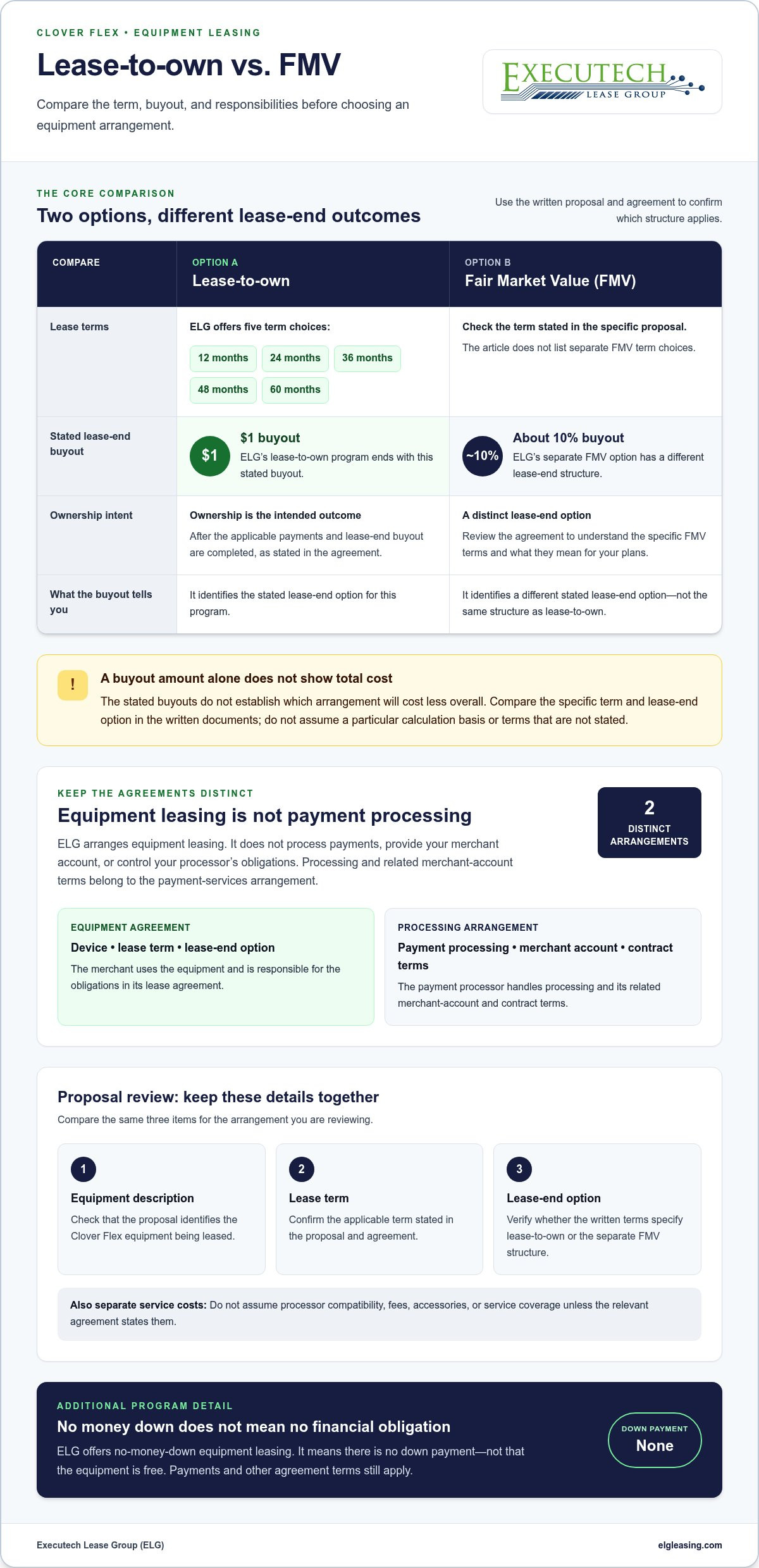
The lease-end option affects the ownership outcome. Compare it with the term stated in the proposal, not just the monthly commitment or equipment description. ELG offers Clover lease-to-own terms of 12, 24, 36, 48, and 60 months. Its separate FMV option has a different lease-end structure.
Lease-to-own versus FMV: what the stated buyout tells you
ELG’s lease-to-own program ends with a $1 buyout. Its FMV option ends with about a 10% buyout. These are distinct program options, not interchangeable descriptions of the same lease. The stated buyouts identify different lease-end options, but they don’t establish which arrangement will cost less overall.
Keep the comparison grounded in the documents. For each proposal, identify the lease term and specific lease-end option. Don’t assume the FMV buyout uses a particular calculation basis or that either option includes terms not stated in the agreement.
How to match the structure to your ownership plans
Start with your plans for the equipment. If your intention is to own it at the end of the lease, the lease-to-own option’s stated $1 buyout reflects that goal. If you’re considering FMV, include its separate approximate 10% buyout in your proposal review. The right structure depends on your ownership plans and the written terms, not on a universal claim that one option is best.
Next, compare the term choices with your business plans. Consider which timeline fits your equipment plans, then read the agreement to understand the specific commitment. Don’t assume that a particular term or buyout produces savings or a specific accounting treatment. Focus on the written terms and how the end-of-term option aligns with your intent.
For broader equipment context, explore ELG’s equipment leasing programs. Compare the Clover Flex equipment description, applicable term, and stated buyout option side by side. This keeps the clover flex lease to own decision tied to your ownership plans rather than assumptions.
Payment-services vendors and sales partners interested in an ELG relationship can discuss becoming an ELG vendor.
What should you review in a Clover Flex lease-to-own proposal?
A proposal is easier to assess when you separate three things: the equipment being leased, the lease terms, and the services covered by your payment-processing arrangement. Compare the written details with how your business plans to use the device. Don’t rely on assumptions about included accessories, processor compatibility, fees, or service coverage unless the relevant agreement states them.
Checklist for the device and proposed term
Use this review to check that the proposal reflects the arrangement you intend to enter:
- Equipment description: Check that the proposal identifies the Clover Flex equipment being leased. Compare that description with your intended workflow, including where staff expect to use the device and the tasks they need it to support.
- Lease term: Confirm the written term matches the option you’re considering. ELG’s lease-to-own terms are 12, 24, 36, 48, or 60 months.
- Lease-end option: Locate the stated end-of-term option. The $1 buyout applies only to ELG’s lease-to-own program, not to every lease structure.
- Agreement details: Read the proposal and agreement together. Check that the equipment, term, and lease-end option align across the documents.
For example, if staff need to move the device between service areas, make sure the written equipment description corresponds to the equipment you’re evaluating. This check matches the proposal to your intended use. It doesn’t establish that a particular configuration or accessory is included.
Questions about responsibilities and payment processing
Keep equipment obligations distinct from transaction-processing arrangements. The equipment lease governs the leased equipment and its lease terms. A separate merchant-account or processing agreement governs payment processing, including the applicable processing rates and processor commitments.
As you review the documents, identify which agreement covers each responsibility and which parties are named in it. ELG arranges equipment leases. It doesn’t supply merchant accounts, process payments, or control processor obligations. Your merchant-services partner and payment processor have separate roles in the processing relationship.
Don’t assume compatibility across every Clover Flex configuration and processor. Keep that question separate from the lease review, and use the applicable product and processing information rather than treating the equipment proposal as a guarantee of universal compatibility. A careful review makes the clover flex lease to own proposal clearer: you can identify the equipment described, the term that applies, and where processing responsibilities sit.
How the Clover Flex lease-to-own decision fits your business workflow
A sound equipment decision follows your actual workflow, not assumptions about what a device or lease includes. Use four steps: define how your team will use the Clover Flex, review the written proposal, compare its structure with your ownership plans, and separate equipment responsibilities from payment-processing decisions.
A practical sequence for evaluating a proposal
- Identify the use. Describe where and how your team expects to use the Clover Flex and what work it needs to support.
- Review the proposal. Read the equipment description, selected lease term, and lease-end option together.
- Compare the structure. Match the lease-end option to your intended ownership outcome and business plans.
- Clarify responsibilities. Keep the equipment lease distinct from the merchant account and processing agreement.
This sequence gives merchants and their merchant-services sales partner a focused way to discuss a proposal. ELG’s leasing program information can help explain the equipment lease structures available.
Keep equipment decisions separate from processor decisions
A Clover Flex lease addresses equipment. Payment processing, merchant-account terms, and processor commitments belong to a separate arrangement. ELG arranges equipment leases; it isn’t a payment processor, doesn’t supply merchant accounts, and doesn’t control processor obligations. Keep those responsibilities clear in discussions with your merchant-services sales partner.
ELG provides credit decisions in 1-2 business hours. That timing refers only to the credit decision. It doesn’t indicate funding or delivery, or determine processor approval, compatibility, or contract terms. Treat these as distinct matters rather than assuming a lease decision settles the processing relationship.
If you need a broader view of equipment lease structures, review ELG’s leasing program options. Bring your intended workflow, proposal details, and ownership plans into the conversation. This keeps a clover flex lease to own decision grounded in your business needs and the written agreement.
How merchants and payment partners can take the next step with ELG
Move forward with a clear match between how your business will use the Clover Flex, the proposed lease term, and your ownership plans. Executech Lease Group (ELG) arranges equipment leases; it isn’t a payment processor. That distinction helps merchants and payment partners direct questions to the right part of the relationship.
What merchants and sales partners should have ready
Merchants can start with the equipment proposal and lease option they’re reviewing. Keep the equipment description, term, and lease-end option together so the discussion stays focused on the actual arrangement. Questions about processing rates, merchant-account terms, or processor commitments belong to the separate processing relationship.
Payment-services vendors and sales partners can discuss how equipment leasing fits into their merchant-services relationship. If you’re an independent sales organization (ISO), bring the relevant equipment proposal and the merchant’s intended use into the conversation. Clear separation helps prevent equipment lease terms from being confused with processing services.
Discussing an ELG vendor relationship
For merchants, the decision is whether the equipment, lease term, and ownership outcome fit the business plan. For payment-services vendors and sales partners, the next step is different: discuss a potential vendor relationship with ELG. The Apply Now page is for vendor inquiries. It isn’t a merchant financing application, and submitting a vendor inquiry doesn’t produce a credit decision.
ELG’s role remains focused on equipment leasing. It doesn’t process payments, supply merchant accounts, or control processor obligations. Keep those responsibilities and agreements distinct as you move from reviewing a Clover proposal to discussing a partner relationship.
Payment-services vendors and sales partners can discuss becoming an ELG vendor.
A well-matched clover flex lease to own arrangement starts with practical alignment: the proposed device suits the intended workflow, the lease term fits your plans, and the stated ownership outcome is clear. Merchants can focus on those proposal details, while prospective vendor partners can use the separate inquiry path to discuss working with ELG.
Move Forward With Clear Lease and Ownership Terms
A confident clover flex lease to own decision starts with three points: how the equipment fits your workflow, which lease term matches your plans, and what ownership option the agreement states. ELG’s lease-to-own terms are 12, 24, 36, 48, or 60 months, ending with a $1 buyout. Keep the equipment lease separate from payment-processing and merchant-account arrangements.
ELG provides credit decisions in 1-2 business hours. That is decision timing only, not a promise of funding, delivery, or a particular outcome. Merchants should review their equipment proposal and applicable agreement. Payment-services partners interested in an ELG vendor relationship can use the vendor inquiry page, which is not a merchant financing application or credit-decision form.
With the term, equipment, and ownership intent aligned, you can take the next step with a clearer understanding of the arrangement.
Discuss becoming an ELG vendor
Frequently Asked Questions
What does Clover Flex lease-to-own mean?
A clover flex lease to own arrangement lets your business use the equipment under a lease, with ownership as the intended outcome after completing the applicable terms and lease-end option. ELG’s lease-to-own program offers terms of 12, 24, 36, 48, or 60 months and ends with a $1 buyout. Review the written proposal and agreement to understand the specific equipment, term, and obligations.
Does ELG require money down for Clover equipment leasing?
ELG offers no-money-down equipment leasing. This means a down payment isn’t required for that arrangement, but it doesn’t mean the equipment is free or remove the lease’s financial obligations. Review the proposal and agreement for the applicable terms. Keep the equipment lease separate from payment-processing rates, merchant-account terms, and other commitments governed by a different agreement.
How do ELG’s lease-to-own and FMV options differ?
ELG’s lease-to-own option ends with a $1 buyout, while its Fair Market Value (FMV) option ends with about a 10% buyout. These are separate lease structures with different stated lease-end options. Compare the written term and end-of-lease option in each proposal alongside your ownership plans. Don’t assume the options share the same calculation basis or other terms.
How long does ELG take to make a credit decision?
ELG provides credit decisions in 1-2 business hours. That time refers only to the credit decision. It isn’t a promise of funding, equipment delivery, or a particular outcome. Keep those steps distinct as you review a Clover equipment proposal, and use the written agreement to understand the lease terms that apply to your arrangement.
Does ELG process payments for Clover Flex merchants?
No. ELG does not process payments for Clover Flex merchants. ELG arranges equipment leases, rather than processing transactions or supplying merchant accounts. Payment-processing services, processing rates, and merchant-account terms belong to a separate relationship and agreement. Keep those responsibilities distinct when reviewing an equipment lease and discussing your business’s processing arrangements.
Can every Clover Flex device work with every payment processor?
Don’t assume that every Clover Flex configuration works with every payment processor. The equipment lease doesn’t establish universal compatibility or determine processor approval, portability, or contract terms. Review the specific equipment description in the proposal and keep processor questions separate from the lease. Use the applicable product and processing information to assess how the device fits your intended setup.
Can an ISO or sales agent discuss an ELG vendor relationship now?
Yes. An ISO or sales agent can discuss becoming an ELG vendor through the vendor inquiry page. That page is for vendor relationship inquiries, not a merchant financing application, and submitting an inquiry doesn’t produce a credit decision. Keep partner discussions separate from a merchant’s equipment proposal and any credit decision related to a lease.

Article by
Robert Ensminger
Robert Ensminger is the founder and CEO of Executech Lease Group (ELG Leasing), which specializes in equipment leasing and financing solutions for the merchant-services, payments, POS, and FinTech industries. With more than 20 years of industry experience, Robert helps independent sales organizations, payment processors, POS providers, and software companies develop practical leasing, subscription, and SaaS-monetization programs. He founded ELG in 2010 and guided the company to recognition on the Inc. 5000. His work focuses on responsive service, transparent program structures, and helping ELG’s partners close more business while creating sustainable revenue.