
What if the right handheld POS decision starts with your workflow, not the device? Handheld POS financing can help you acquire payment equipment without a large upfront equipment investment. The equipment and lease structure still need to fit how your business operates.
A handheld may suit tableside payments, busy checkout areas, or transactions away from a fixed counter. It may be less useful if daily operations depend on a stationary setup. The agreement matters too: an FMV lease and a lease-to-own program can have different end-of-term outcomes. Compare those terms with your upgrade plans and how long you expect to use the equipment.
This guide explains how to assess whether a handheld POS fits your workflow, compare FMV and lease-to-own options, and consider cash flow alongside equipment needs. You’ll also learn how POS equipment leasing, including terms from 12 to 60 months, can fit into a broader decision about hardware and cloud-based POS software. The goal is to choose a structure that supports your business today and your plans for what comes next.
Key Takeaways
- Identify where mobile transactions happen, such as tableside service or sales away from a fixed counter, before choosing handheld equipment.
- Match the equipment and financing structure to your workflow, cash-flow priorities, and upgrade plans.
- Compare FMV, lease-to-own, and subscription options by the equipment relationship and agreement terms that matter to your business.
- Review the equipment covered, lease term, payment schedule, and stated responsibilities before moving forward.
- Explore ELG’s POS equipment lease options, including 12-60-month terms, for handheld POS equipment and related software.
What handheld POS financing covers: when a mobile payment setup makes sense
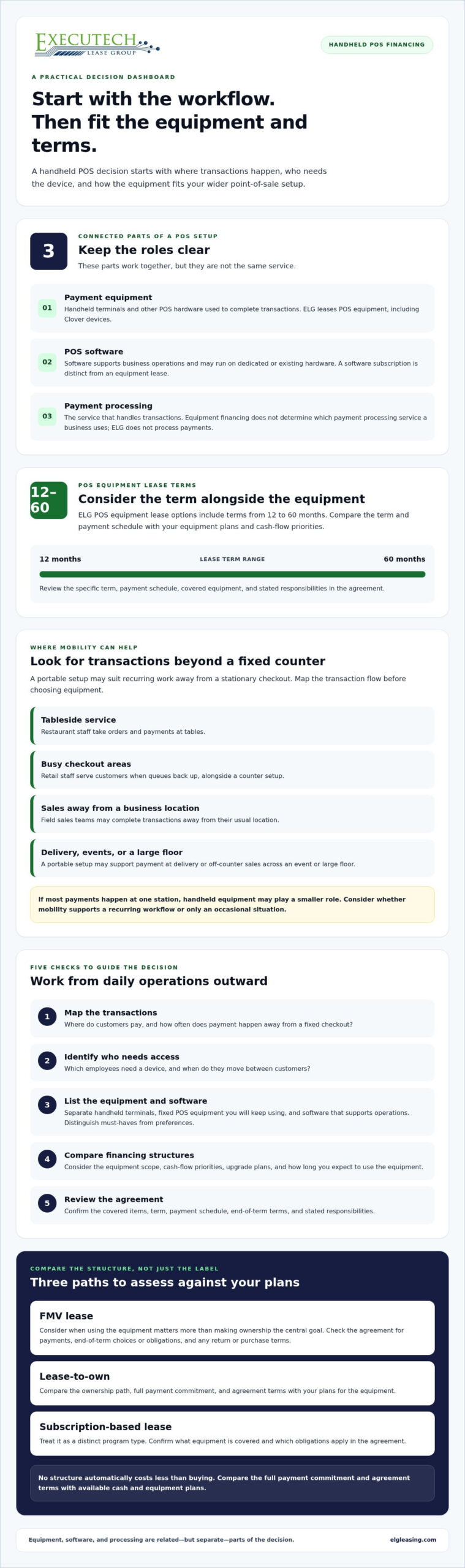
Handheld POS financing gives a business access to eligible payment equipment through a structured lease program. Consider the device as part of a broader point-of-sale setup: the equipment used to complete transactions, the software that supports operations, and the payment processing service that handles transactions. These are related, but they are not the same service. ELG leases POS equipment, including Clover devices, and does not process payments.
A point-of-sale setup brings together the tools and systems a business uses to complete sales. A handheld setup lets staff take transactions to customers or complete sales away from a fixed checkout.
What counts as a handheld POS setup?
A handheld payment terminal is portable equipment used to accept transactions away from a fixed checkout. Mobile POS software, by contrast, runs on hardware such as a device already used by the business. This distinction helps define what a lease needs to cover: the terminal, other POS equipment, software, or a combination. Start with the task you need to support, then identify the equipment and software involved.
Which business workflows can benefit from mobility?
Mobility can make sense when transactions regularly happen beyond a counter. A restaurant may take orders and payments at tables. Retail staff may serve customers in a queue. Field sales teams may complete transactions away from a business location, while delivery staff may need to handle payment at the point of delivery. Off-counter sales at events or across a large floor can also make a portable setup useful.
Map the transaction flow before choosing equipment or a lease structure. Where do customers pay? Which employees need a device, and when? Would handheld equipment support a recurring workflow or only an occasional situation? These answers help separate a practical need from mobility that sounds appealing but may not improve daily work.
Handheld POS financing isn’t a fit simply because a device is portable. Consider your workflow, the equipment you need, and the responsibilities and terms in the financing agreement. Hardware financing also doesn’t determine which payment processing service your business uses. Keep those decisions separate, then consider how each part will work in your POS setup.
Match handheld POS equipment and financing to your operating needs
Choose a setup by working from daily operations outward. A device that looks suitable on paper may not match how staff serve customers, where transactions happen, or what your POS software needs to support. Use this sequence to guide the decision: map workflows, identify equipment requirements, assess software, compare financing structures, then review the agreement.
Start with transactions, staff, and mobility
List where customers pay, which employees need access to the equipment, and whether they move between customers during a shift. A restaurant may need handhelds at tables while retaining a fixed checkout for other transactions. A shop with frequent queue backups may use a mobile device alongside its counter setup. If most payments happen at one station, handheld equipment may play a smaller role.
Build an equipment inventory before deciding what to lease: handheld terminals, any fixed POS equipment you’ll keep using, and the software that supports the operation. Separate must-haves, functions needed for your actual workflow, from preferences, features that would be useful but aren’t essential. For a broader look at equipment categories, explore this guide to best mobile POS systems.
Connect equipment needs to the financing structure
Consider the equipment scope and agreement together. Record which items you need, how they’ll be used, and whether the handheld will replace or complement fixed equipment. Then compare each program with your plans for the equipment and future upgrades. Review available leasing program structures as part of that evaluation.
Keep software in view, but distinguish it from hardware. A lease for POS equipment and a software subscription are different parts of the overall setup. ELG also offers financing for cloud-based POS software, so you can consider software alongside equipment rather than treating the handheld as the entire POS solution. Make sure the agreement clearly identifies the items covered and your responsibilities.
Before moving forward, confirm that the equipment list reflects your intended setup, the term and payment schedule fit your planning, and the agreement spells out your responsibilities. After mapping your workflow and equipment needs, explore a POS equipment lease.
FMV, lease-to-own, or subscription: compare handheld POS financing paths
The right structure depends on how you plan to use the equipment, your cash-flow priorities, and the obligations you’re prepared to take on. FMV, lease-to-own, and subscription-based leases are distinct program types. None automatically costs less than buying. Compare the full payment commitment and agreement terms with your available cash and equipment plans.
| Program type | Equipment relationship | What to resolve in the agreement |
|---|---|---|
| FMV lease | A lease structure to consider when using the equipment matters more than making ownership the central goal. | What payments are due, what choices or obligations apply at the end, and how the agreement defines any equipment return or purchase terms. |
| Lease-to-own | A structure oriented toward acquiring the equipment through the lease arrangement. | How payments are scheduled, what the agreement requires to complete the path to ownership, and what obligations remain at the end of the term. |
| Subscription-based lease | A subscription-style lease for relevant equipment models, with terms governed by the agreement. | Which equipment is covered, the payment schedule and term, and the applicable end-of-term responsibilities. |
How FMV and lease-to-own differ
ELG offers both FMV and lease-to-own options, but the labels alone don’t establish your specific rights or responsibilities. These structures reflect different intended relationships with the equipment. Review the agreement for the payment obligations and exact end-of-term outcome. Don’t assume a purchase option, residual amount, return process, or ownership transfer unless the contract spells it out.
When subscription-based POS financing may be relevant
A subscription-based lease may be relevant when its structure fits the equipment and business needs you’ve identified. It isn’t automatically a month-to-month rental: the agreement defines the term, payment commitments, and end-of-term responsibilities. Review ELG’s subscription-based lease option as you compare program structures.
To compare financing with buying, weigh more than the initial cash outlay. A lease can spread payments over time, but it also creates contractual obligations. Buying may have a different cash-flow impact and equipment relationship. Compare the payment schedule, total obligations stated in the agreement, and how long you expect to use the handheld. The executed agreement, not the program label, sets the payment requirements and end-of-term outcome.
Evaluate a handheld POS financing agreement before moving forward
A clear agreement makes it easier to compare handheld POS financing options with your operating plan. Review the written terms before committing, focusing on the equipment covered, payment schedule, and responsibilities through the end of the term. ELG offers POS equipment leases with terms from 12 to 60 months.
Which agreement details should merchants understand?
Read the agreement as a whole. A program name identifies the general structure, but it doesn’t replace the specific contract terms. Confirm that the listed equipment matches your intended setup, then review the term, payment schedule, and conditions that apply during the lease.
- Equipment: Identify the items covered and make sure the list reflects your planned POS setup.
- Term and payments: Note the stated lease duration, payment timing, and obligations throughout the term.
- Responsibilities: Review what the agreement says about equipment use and any responsibilities that apply at the end of the term.
End-of-term provisions are specific to the agreement. Don’t infer a return, purchase, or ownership outcome from a program label alone. Understanding the written terms is a practical part of comparing options. If a clause is unclear, get the wording clarified before relying on an interpretation.
How do payment-services partners fit into the process?
ELG serves merchants through merchant-services providers, ISOs, and payment processors. These partners can connect merchants with POS equipment leasing options. Keep the roles distinct: equipment financing concerns the leased hardware and its agreement, while payment processing concerns how transactions are handled. ELG provides equipment leasing, not direct payment processing.
Review the steps involved alongside the agreement to keep the equipment decision organized. The financing process starts with identifying the equipment and program structure that fit your needs.
Explore handheld POS financing with ELG Leasing
A sound financing decision connects four pieces: the workflow you need to support, the equipment that fits it, the program structure that aligns with your plans, and agreement terms you understand. ELG provides credit card terminal and POS equipment leases with terms from 12 to 60 months, along with FMV, lease-to-own, and subscription-based options. The right fit depends on your equipment needs and priorities, not mobility alone.
What to prepare before exploring financing
Start with a brief description of the project. Note what the handheld or other POS equipment will support, where transactions take place, and which staff members will use it. A clear use case keeps the equipment decision connected to daily operations.
- Equipment: List the handheld terminals and any related POS equipment you plan to use.
- Software: Note whether cloud-based POS software or subscription-based POS needs are part of the project.
- Priorities: Identify your cash-flow considerations, plans for the equipment, and preferred financing structure.
- Agreement review: Be ready to examine the stated term, payment schedule, equipment covered, and end-of-term responsibilities.
This preparation helps you compare program structures with your plans. ELG’s leasing options cover equipment needs, and cloud-based POS software can also be considered as part of the broader setup. Keep the written agreement central to the decision: it sets out the obligations and outcomes that apply to your arrangement.
Move from comparison to application
Once you’ve mapped your workflow and equipment, compare the available structures with how you intend to use the hardware. An FMV lease, lease-to-own program, or subscription-based lease represents a different arrangement. Focus on the stated commitments and equipment relationship rather than assuming a label determines the result.
ELG serves merchants through merchant-services providers, ISOs, and payment processors. ELG provides equipment leasing, while payment processing remains a separate service. Keeping these roles distinct helps clarify the equipment financing decision as you plan how the POS setup will operate.
Use your equipment list and business use case to explore POS equipment financing with ELG.
Build a POS financing plan around your workflow
The strongest handheld POS financing decision starts with how transactions happen in your business, not mobility alone. Match the equipment to the workflow, then compare FMV, lease-to-own, and subscription-based structures with your cash-flow priorities and upgrade plans. Before you commit, read the agreement for the equipment covered, payment schedule, term, and end-of-term responsibilities.
ELG offers 12-60-month leases for credit card terminals and POS equipment, with FMV, lease-to-own, and subscription-based options. Financing for POS equipment and cloud-based SaaS POS software can also support a broader technology setup. The right path depends on your operating needs and the terms in your agreement.
With a clear workflow and a careful comparison of your options, you can move forward with greater confidence. Explore POS equipment financing with ELG Leasing and compare the available structures with your equipment plans.
Frequently Asked Questions
What is handheld POS financing?
Handheld POS financing lets a business access eligible portable payment equipment through a financing or lease arrangement rather than treating the device as a standalone purchase. Consider its role in your workflow, the financing structure, and the payment obligations in the agreement. ELG offers POS and credit card equipment leases, including FMV, lease-to-own, and subscription-based options.
Can I lease a handheld POS terminal?
Yes. ELG provides leasing solutions for credit card terminals and POS equipment, including Clover devices. Compare how the terminal will be used in your business with the agreement’s structure, payment schedule, and responsibilities. Don’t assume every handheld terminal has identical terms or fits the same program. Review the agreement for the details that apply to your arrangement.
How does handheld POS financing work?
Start by identifying the equipment you need and the workflow it will support. Then compare financing structures and review the proposed agreement, including its term and payment obligations. ELG offers 12-60-month equipment leases, with options that include FMV, lease-to-own, and subscription-based arrangements. The executed agreement governs the specific payment requirements and responsibilities for your financing arrangement.
Is handheld POS financing different from buying a device outright?
Yes. Financing uses an agreement with defined terms and payment obligations, while buying outright means purchasing the equipment directly. Neither approach is automatically the better fit for every merchant. Compare the equipment you need, your cash-flow priorities, and the contract structure you prefer. If you’re considering a lease, review its end-of-term provisions alongside the payment schedule so you understand the obligations before deciding.
Can POS financing include cloud-based software?
Yes. ELG offers financing for cloud-based SaaS POS software as well as POS equipment. Software access and physical equipment are distinct parts of a POS setup, so identify which needs your project includes. Then review the applicable agreement for its scope, term, payment schedule, and responsibilities. The agreement sets out the terms for your arrangement.
How much does handheld POS financing cost?
The cost depends on the equipment and the specific financing agreement. Review the payment schedule and the full obligations stated in the proposed agreement rather than relying on a general estimate. ELG offers several equipment financing structures, including FMV, lease-to-own, and subscription-based options. Compare the commitments in the agreement with your cash-flow priorities and equipment plans.
What happens at the end of a handheld POS lease?
End-of-term options and responsibilities depend on the program and the specific agreement. FMV and lease-to-own are distinct structures, but their outcomes can vary by contract. Before entering a lease, review the end-of-term provisions alongside the stated term and payment schedule. The written terms govern what applies to your arrangement, so use them to assess how the lease fits your equipment plans.

Article by
Robert Ensminger
Robert Ensminger is the founder and CEO of Executech Lease Group (ELG Leasing), which specializes in equipment leasing and financing solutions for the merchant-services, payments, POS, and FinTech industries. With more than 20 years of industry experience, Robert helps independent sales organizations, payment processors, POS providers, and software companies develop practical leasing, subscription, and SaaS-monetization programs. He founded ELG in 2010 and guided the company to recognition on the Inc. 5000. His work focuses on responsive service, transparent program structures, and helping ELG’s partners close more business while creating sustainable revenue.