
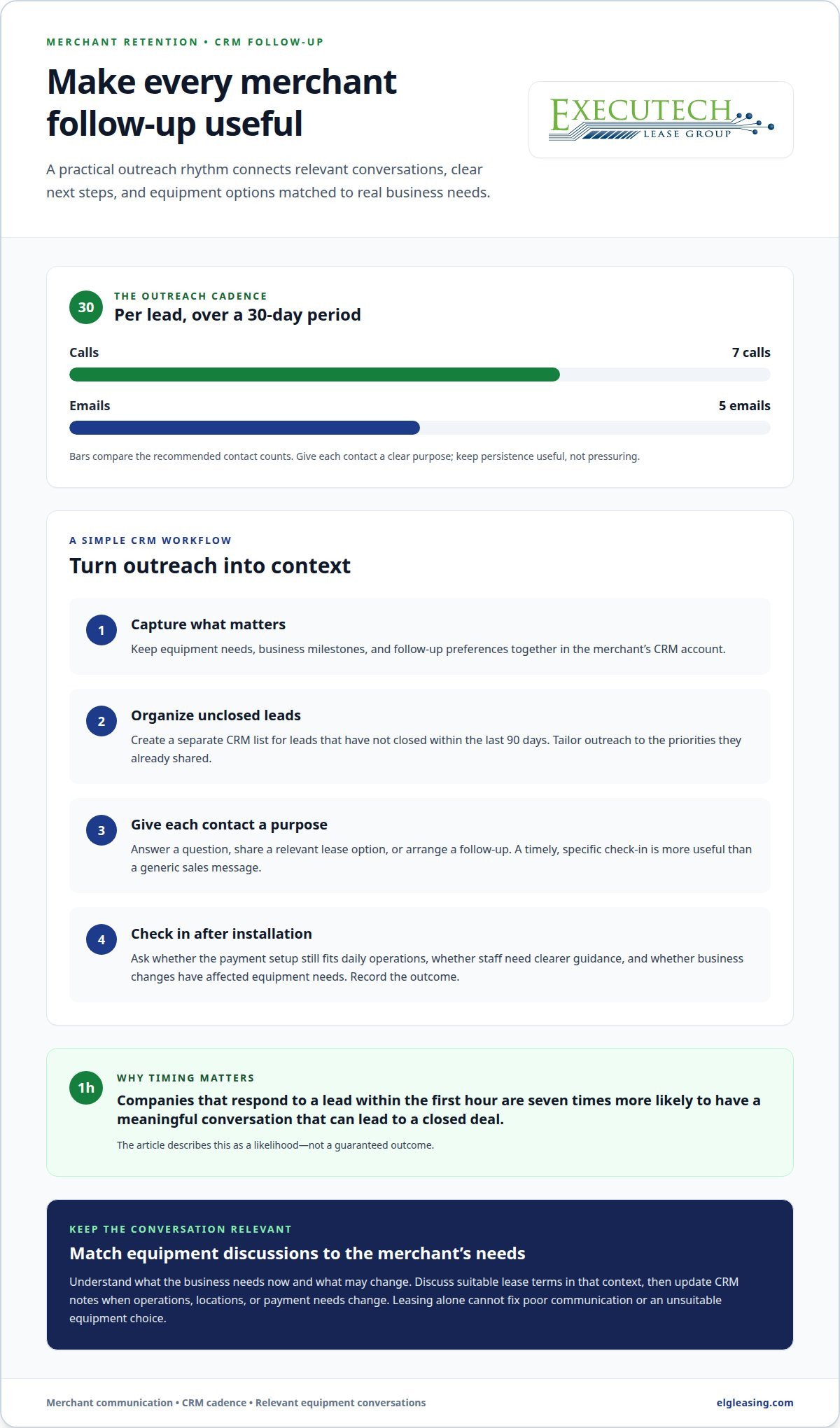
Retention takes more than a competitive lease: it depends on relevant marketing, clear communication, and follow-up that makes merchants feel supported. Effective merchant retention strategies using flexible leasing connect those efforts with equipment terms that can better fit a business’s changing needs. For CRM follow-up, a practical cadence is seven calls and five emails per lead over a 30-day period.
Merchants are more likely to stay when the relationship continues beyond the initial sale. The challenge is keeping communication timely and useful without adding unnecessary complexity. This article explains how to organize CRM outreach, tailor conversations to merchant needs, and use flexible leasing as part of a broader retention approach. Consistent check-ins can surface concerns early, before a merchant starts considering other options.
Key Takeaways
- Match lease options to a merchant’s business needs and growth plans to make staying a practical choice.
- Use CRM notes and regular check-ins to spot concerns early and make follow-up more relevant.
- Coordinate targeted promotions and shared events to help merchants reach customers across the retail space.
- Keep tenants informed about property updates, address maintenance concerns through a clear process, and build trust through consistent communication.
- Review incentives and lease terms with retention in mind, since tenant continuity can reduce turnover work and support steadier occupancy.
3. How does flexible leasing help retailers retain merchants?
Flexible leasing can help merchants access payment technology without making a large upfront equipment purchase. A retailer opening a second location, for example, may need POS systems and card terminals at several checkout points. Lease options let the merchant consider equipment needs alongside business priorities. That fit can support the wider relationship, but leasing alone cannot solve poor communication or an unsuitable equipment choice.
Start by understanding the merchant’s operating needs. A new shop may prioritize manageable startup costs, while an established retailer may need equipment for a new sales channel. Ask what the merchant needs now, what may change, and which payment tasks create friction. Then discuss how the lease structure fits those needs. Flexibility matters when it addresses a real business requirement, not merely when it sounds attractive.
CRM makes that conversation actionable. Record each merchant’s equipment needs, business milestones, and follow-up preferences in one account. Create a separate CRM list of unclosed leads from the last 90 days, then tailor outreach to their stated priorities. For example, a retailer that delayed a POS decision during a store opening may be ready to revisit it after operations settle. A relevant check-in beats a generic sales message.
Use a consistent cadence without turning persistence into pressure. The recommended practice is seven calls and five emails per lead over a 30-day period. Keep a clear purpose for each contact, such as answering a question, sharing a lease option, or arranging a follow-up. Companies that respond to a lead within the first hour are seven times more likely to have a meaningful conversation that can lead to a closed deal. Fast, useful responses set the tone for the relationship.
After equipment is installed, schedule periodic check-ins and record the outcome. Ask whether the payment setup still fits daily operations, whether staff need clearer guidance, and whether business changes have affected equipment needs. If a retailer adds a location or changes how customers pay, update its CRM record and discuss relevant options. Avoid assuming every merchant needs the same equipment or lease structure. Specific notes help your team respond with context instead of restarting the conversation each time.
In practice, merchant retention strategies using flexible leasing connect three steps: understand the merchant’s needs, discuss suitable lease terms, and follow up through CRM. This gives retailers a clear way to discuss payment equipment as their business changes. It also helps the sales team distinguish a timing issue from an unanswered concern. Review CRM activity regularly and use what you learn to improve outreach and strengthen merchant communication.
Understand the merchant’s needs, support day-to-day operations, and maintain a useful relationship. For property owners, community events, beautification projects, and outreach programs can help make a retail strip a community landmark and support tenant retention. Events and promotions that encourage customers to visit multiple stores can increase foot traffic for retail tenants. Retaining commercial tenants can also reduce turnover-related work, such as advertising, repairs, and tenant screening.
4. What lease incentives help small businesses and independent retailers stay?
For an independent retailer, a useful lease incentive addresses a real operating pressure. A shop testing a new location may value a shorter commitment, while an established store may need room to expand. Property managers can discuss terms that adapt to changing business conditions. The strongest offer connects flexibility to a specific need instead of presenting a generic concession with little practical value.
Start with the retailer’s near-term plans. A seasonal business may need a different space commitment from a retailer building steady, year-round trade. Short-term leases can suit some situations, while expansion options may help a growing merchant remain in the same property. These terms can support continuity as a business changes, but they should be designed around the space and the retailer’s plans.
Space needs can change in either direction. A retailer adding a sales area may want the option to expand, while a business consolidating operations may need less space. Some commercial leases allow tenants to return part of their leased space, although contraction provisions are less common. Property managers can raise these possibilities during renewal discussions, rather than waiting until a mismatch threatens the relationship.
Timely repairs and responsive support also matter. If a shop reports a recurring issue with its entrance, lighting, or shared area, the property manager can record the concern, set a clear follow-up, and provide updates. This gives the retailer a visible process instead of leaving the issue unanswered. The practical incentive is to resolve an operational obstacle affecting the merchant’s daily experience.
Match each proposal to the reason a retailer might leave. If growth is the pressure, discuss expansion needs. If uncertain business conditions create hesitation, consider whether the lease structure offers appropriate flexibility. If a property issue causes frustration, coordinate a response and keep the merchant informed. Specific steps are easier to explain and more relevant than a standard offer applied to every tenant.
Keep expectations clear in every conversation. Explain which space, support, or timing the proposal addresses, then summarize the agreed next step. A retailer considering a second location, for example, needs a direct discussion about space requirements and timing, not a vague assurance of future flexibility. Clear communication helps merchants assess whether an arrangement fits their plans and helps property teams follow through.
Retailers also manage payment technology alongside storefront decisions. If equipment financing is part of a merchant’s planning, you can review payment equipment leasing options as a separate business consideration. Keep that decision distinct from the property lease. A well-matched space arrangement and a suitable equipment plan address different needs, yet both can contribute to a more workable operating setup.
5. Strategies successful
Successful retention depends on useful communication. Share property updates, planned improvements, and changes before they affect daily operations. If construction will alter access to a retail strip, explain the timing, affected entrances, and available customer routes. These details help store owners plan staffing and promotions. A short, practical update builds more trust than a broad announcement after disruption begins.
Use regular meetings and surveys to understand tenants’ actual needs. A property manager might meet with a retailer to discuss foot traffic, shared-area concerns, and seasonal plans. A brief survey can capture concerns from merchants who cannot attend. Review responses, identify recurring issues, and assign follow-up actions. This turns feedback into operational decisions instead of collecting opinions without showing tenants what changed.
Keep communication open between formal meetings, too. A retailer reporting a lighting issue in a shared walkway needs a clear acknowledgement and updates as the concern moves toward resolution. Property teams can record the report, assign responsibility, and explain what happens next. If several stores raise the same issue, address it as a property-wide concern. Timely, specific responses can surface friction before it becomes a reason to relocate.
Include tenant businesses in the property’s marketing. A shopping center could coordinate a seasonal event where participating stores offer demonstrations, tastings, or product displays. Promote it through the property’s social media channels and each merchant’s own accounts. Agree on the date, participating tenants, promotional materials, and responsibilities in advance. Coordination gives customers a reason to visit multiple stores and helps retailers benefit from shared exposure.
Make cooperation practical. Invite neighboring merchants to create a joint promotion, such as a gift-with-purchase offer that directs customers to another participating shop. A bookstore and café, for example, could feature each other’s locations in a campaign. Property managers can support coordination by sharing schedules, aligning messages, and promoting the activity. Each business keeps its identity while contributing to a stronger retail destination.
Close the loop after each initiative. Following an event, ask participating merchants what brought customers in, which promotion they used, and what they would change next time. Record the feedback and carry useful lessons into the next campaign. For property updates, report which tenant concerns were addressed and what work remains. Consistent follow-through makes communication credible and gives managers practical input for improving shared services and future outreach.
Following an event, ask participating merchants what worked and what could be adjusted for future efforts. Use their feedback alongside regular meetings and surveys to assess satisfaction and adjust services. Keep updates on property changes and planned improvements transparent, and maintain open communication so concerns can be identified before they become reasons to consider relocating. Managers and owners can also work with tenants on events and social media promotions, while creating opportunities for businesses to benefit from each other’s customer bases through collective marketing. The article recommends increasing a dealership’s lease portfolio to 40-50 percent.
5. Strategies that
Periodic tenant check-ins work best when each meeting has a clear purpose. Prepare by reviewing the merchant’s recent concerns, business changes, and previous commitments. Ask what is working, what is slowing daily operations, and what support would help. A retailer expanding its product range, for example, may need different visibility or shared-space arrangements. Record each response and assign a specific follow-up action.
Keep the conversation focused on the tenant’s business, not a standard property checklist. A café may care about customer access during nearby work, while a specialty shop may prioritize visibility from the main walkway. Ask questions tied to those needs. Share relevant property updates, then confirm what the manager will do. This helps distinguish an immediate operational issue from a longer-term business concern.
Use a simple CRM record to keep check-ins consistent across the property team at Executech Lease Group (ELG Leasing). Capture the merchant’s preferred contact method, current priorities, open concerns, and agreed next step. If one manager speaks with a shop owner, another team member can continue the discussion without asking the merchant to repeat everything. Keep notes factual and concise. A clear record supports continuity when property responsibilities change.
Make industry insights useful and specific. If a retailer is preparing a product launch, share relevant information about upcoming property events or customer-facing opportunities. If a merchant is reviewing store operations, introduce a relevant vendor when that connection addresses a stated need. A useful introduction is focused, timely, and clearly explained. It should help solve a business problem, not create another sales pitch.
Before making a vendor introduction, explain the reason and the next step. Tell a shop owner, for example, that a vendor may be relevant to an identified storefront project, then ask whether an introduction would help. Keep the merchant in control of the conversation. Property managers at Executech Lease Group (ELG Leasing) can also share insights tailored to the tenant’s needs, such as changes affecting neighboring retailers or opportunities to join a planned event.
Close every check-in by summarizing the tenant’s priority and the agreed action. Record the owner, task, and follow-up date in the CRM. At the next conversation, report progress, even if the issue remains open. This simple discipline shows merchants that their input leads to action. It also helps managers spot recurring concerns and improve service across the property.
Use what you learn to refine each relationship, rather than applying one retention script to every store. A retailer seeking industry connections may value introductions; another may need clearer updates about property plans. Review CRM notes before each conversation, address the merchant’s current priority, and document what happens next. This creates a reliable process while keeping communication personal and relevant.
5. Higher retention
Higher tenant retention changes the workload behind a retail property. Each departure can mean advertising an empty unit, preparing the space, and screening prospective tenants. A continuing tenant reduces the need to repeat those leasing tasks. The practical goal for property managers is to identify friction early and respond before a merchant’s decision creates a vacancy. Track concerns, actions, and renewal conversations in one tenant record.
Long-term tenants can support more consistent occupancy and cash flow. Review each retailer’s business plans, space needs, and unresolved property concerns. A shop planning a new product area, for example, may need to discuss its layout before renewal. The manager can record the request, assess available options, and return with a clear response. This keeps the renewal discussion specific to the merchant’s plans.
Review retention before each renewal conversation. Start with the tenant’s past feedback, then identify open issues and business changes. Ask whether the current space still fits, which property matters affect daily operations, and what improvements would help. Follow up on every response. A retailer that has raised the same concern repeatedly needs a documented action, not another general check-in.
Measure the process, not just the final renewal. Record recurring concerns, response steps, completed improvements, and tenant decisions. If several merchants independently mention the same shared-area problem, treat it as a property-wide signal. Compare feedback across the retail strip, assign an owner to the issue, and report the outcome to affected tenants. These records help direct effort toward problems influencing multiple relationships.
Community outreach can strengthen a retail strip’s role in its neighborhood. A beautification project, local event, or outreach activity gives tenants a shared reason to participate and can help the property become a community landmark. Plan the activity with merchants, clarify their roles, and promote it through participating businesses. Afterward, gather tenant feedback and record useful changes for the next project. Shared participation can strengthen merchants’ connection to the property.
Keep renewal decisions grounded in transparent communication. Explain planned improvements, relevant timelines, and how tenant feedback shaped the work. If a merchant needs different space, discuss the actual business requirement instead of assuming the current arrangement remains suitable. If the concern involves a property issue, state the action and report progress. Clear follow-through gives tenants concrete information to assess continued occupancy.
Retention is strongest when property teams connect each concern to an accountable next step. Review tenant records regularly, address repeated friction, and prepare renewal discussions around the merchant’s needs. This disciplined process can limit avoidable turnover work while supporting continuity across the retail property.
Executech Lease Group (ELG Leasing): 12-60 Month Credit Card and POS Equipment Leases
Executech Lease Group (ELG) helps merchant services providers, ISOs, and payment processors offer merchants leasing options for payment equipment. When a retailer needs POS systems or card terminals but prefers leasing instead of an outright equipment purchase, ELG’s programs can support the conversation.
Available options include 12-60 month credit card and POS equipment leases, Lease-to-Own Programs, and Fair Market Value (FMV) lease options. ELG also leases POS and card terminal equipment, including Clover devices. The right structure depends on the merchant’s equipment needs and preferred approach to the lease.
For providers building merchant retention strategies using flexible leasing, equipment leasing can be one practical element alongside targeted outreach and clear communication. Explore ELG’s equipment leasing programs to compare lease structures for merchant relationships.
Put Your Retention Plan Into Practice
Turn merchant feedback into a clear next step. Use your CRM to assign ownership, track follow-up, and connect each conversation to the merchant’s stated business needs. Merchant retention strategies using flexible leasing work best when equipment options support the wider relationship rather than becoming a one-size-fits-all pitch.
When payment equipment is part of that conversation, Executech Lease Group (ELG Leasing) offers 12-60 Month Credit Card and POS Equipment Leases, Lease-to-Own Programs, and FMV Lease Options. These choices give merchant services providers and payment processors ways to discuss equipment acquisition with their merchants.
Build a process your team can repeat: capture the need, discuss a relevant lease structure, and record the next action. Consistent execution gives every merchant conversation a useful purpose.
Take the next step with a focused plan and keep building stronger merchant relationships.

Article by
Robert Ensminger
Robert Ensminger is the founder and CEO of Executech Lease Group (ELG Leasing), which specializes in equipment leasing and financing solutions for the merchant-services, payments, POS, and FinTech industries. With more than 20 years of industry experience, Robert helps ISOs, payment processors, POS providers, and software companies build practical equipment leasing programs. He founded ELG in 2010. His work focuses on responsive service, transparent program structures, subscription and SaaS-monetization programs, and helping ELG’s partners close more business while creating sustainable revenue.