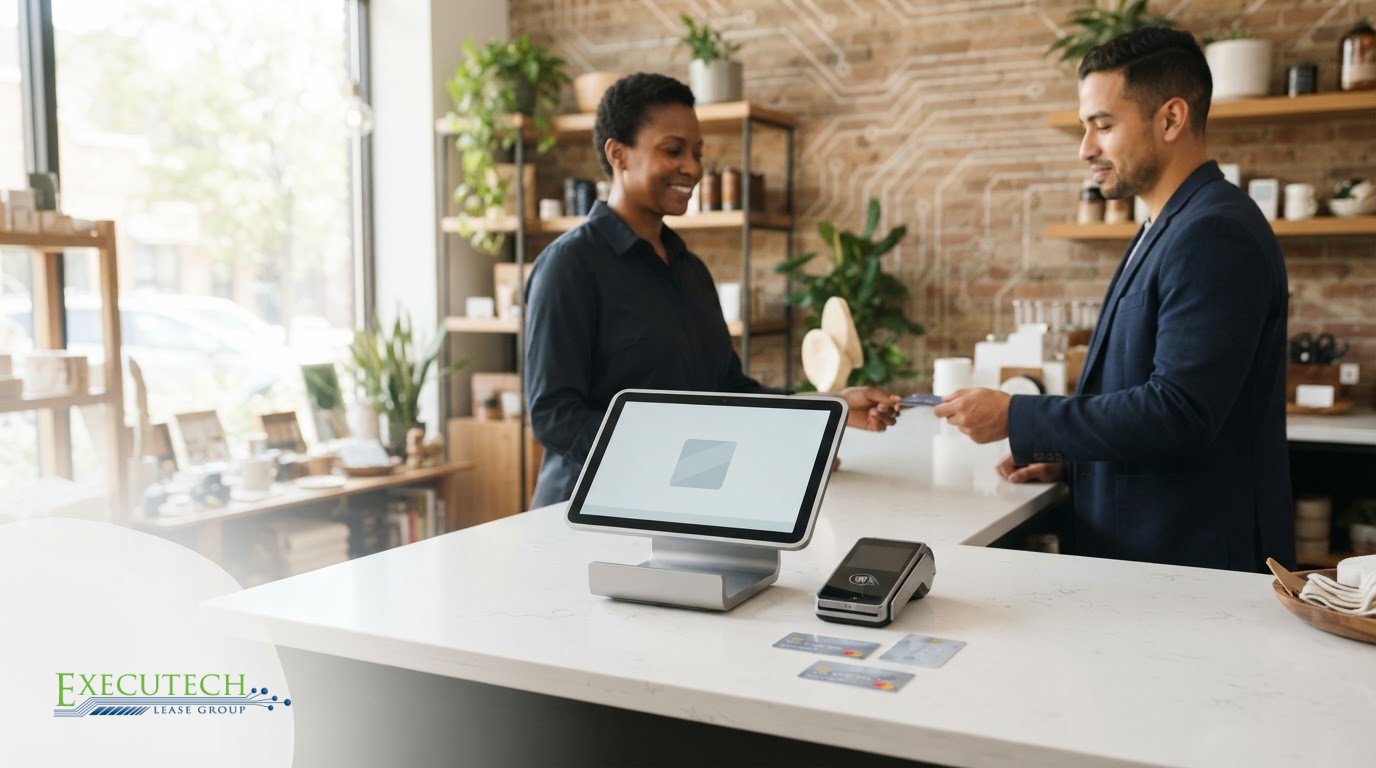
The most expensive point-of-sale terminal you can install is often the one marketed as free. Deceptive vendors routinely promise a no upfront cost POS system, only to quietly recoup those hardware expenses through inflated swipe surcharges and restrictive merchant processing lock-in.
You shouldn’t have to drain vital working capital just to replace sluggish registers with modern checkout terminals. Preserving liquid cash reserves is essential for daily operations, yet binding your revenue to an overpriced merchant account defeats the financial benefit of saving cash upfront.
This 2026 guide reveals how transparent equipment financing lets you secure premium point-of-sale hardware and cloud software with zero initial capital, all while keeping your merchant processing agreements completely independent. We examine the critical distinctions between structured commercial leases, hardware subscriptions, and proprietary provider traps so you can establish predictable monthly operating expenses with clear end-of-term flexibility.
Key Takeaways
- Preserve critical working capital by deploying an authentic no upfront cost POS setup without draining cash reserves into depreciating checkout terminals.
- Evaluate the structural differences between Fair Market Value leases and Lease-to-Own programs to align contract terms directly with your operational lifecycle.
- Identify deceptive “free terminal” promotions that quietly recoup hardware expenses through inflated processing markups and proprietary account lock-in.
- Audit your specific checkout workflows to choose the right configuration of desktop terminals, mobile readers, and cloud software.
- Retain complete operational control by keeping commercial equipment lease terms completely independent of merchant processing contracts.
What Does a No Upfront Cost POS Solution Really Mean?
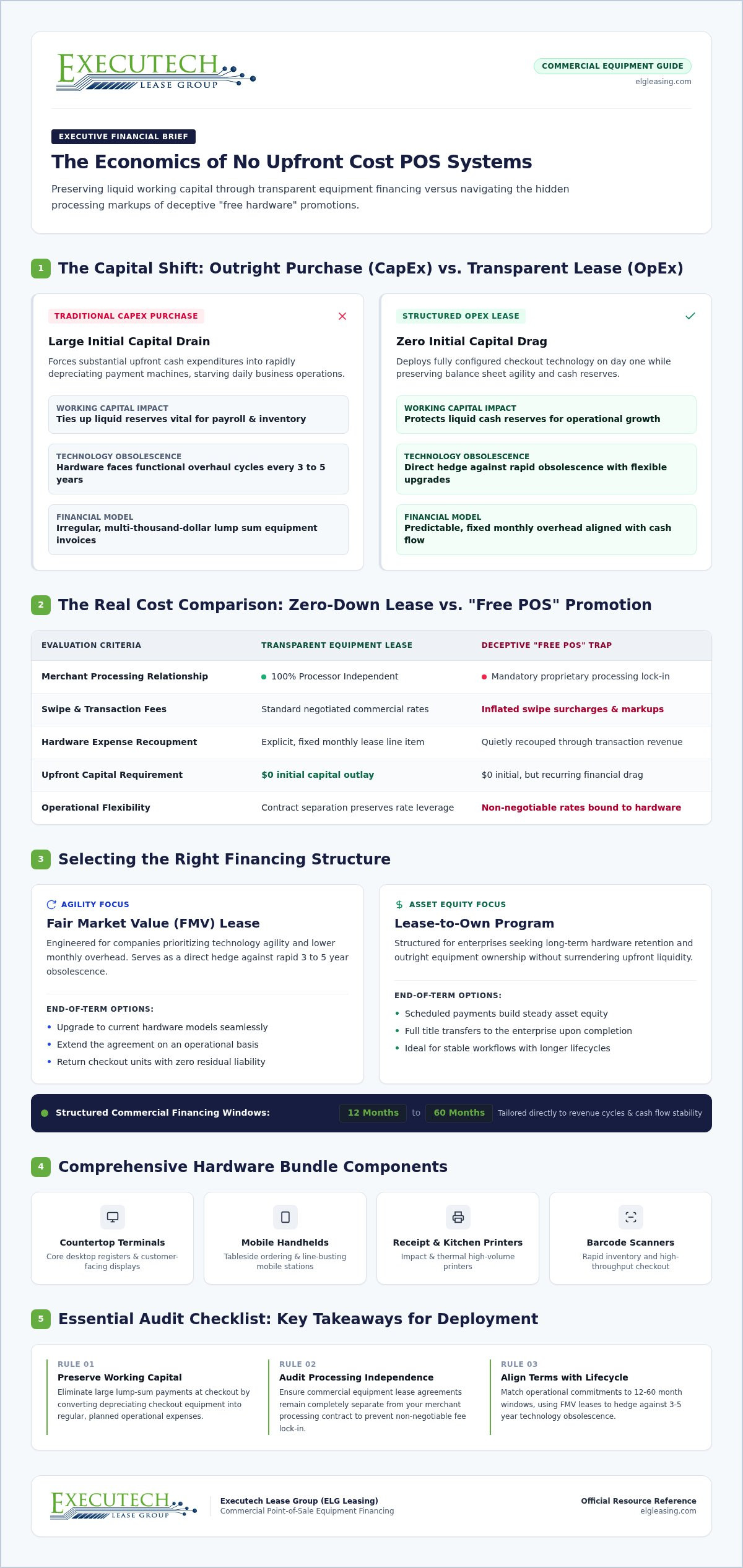
A legitimate no upfront cost POS solution is an equipment acquisition structure designed to preserve capital. It eliminates large lump-sum payments at checkout by converting depreciating machinery into regular operational expenses. Understanding what a Point of Sale (POS) system is and how its software and hardware components interact clarifies why direct purchasing often restricts commercial growth. Traditional purchases drain liquid capital instantly. Transparent financing, by contrast, secures commercial checkout infrastructure without surrendering day-to-day liquidity.
To better understand how to evaluate checkout hardware options without falling into common vendor traps, watch this helpful guide:
Businesses increasingly finance payment technology to shift expenditures from Capital Expenditures (CapEx) to Operating Expenses (OpEx). This distinction is vital for maintaining balance sheet agility. Instead of sinking cash into rapidly aging terminals, companies use leasing programs to spread expenditures across revenue cycles while keeping hardware agreements completely separate from merchant processing contracts.
The Problem with Heavy Upfront Capital Expenditures
Outfitting a retail floor or full-service dining room requires substantial cash. Buying terminals, mobile stations, barcode scanners, and receipt printers outright locks away funds better spent on payroll, inventory, or marketing campaigns. POS hardware also faces steady technology obsolescence, typically requiring functional overhauls every three to five years. Sinking cash into machinery that depreciates quickly reduces working capital and exposes your operation to ongoing replacement cycles.
The True Meaning of Zero-Down Payment Technology
Deploying a true no upfront cost POS model means your business receives fully configured checkout gear on day one without making an initial cash outlay. Structured financing gives you immediate operational utility:
- Predictable monthly overhead: Fixed payments replace irregular, multi-thousand-dollar equipment invoices.
- Comprehensive hardware packages: Single contracts bundle countertop terminals, customer displays, mobile handhelds, and kitchen printers.
- Processor independence: Securing hardware through independent leasing ensures you aren’t bound to non-negotiable payment processing markups.
This operational structure delivers modern payment technology without forcing compromises on transaction rates or reserve capital.
Comparing No Upfront Cost Models: Leases, Subscriptions, and Loans
Selecting the right financing model requires looking past generic small-business loans. Traditional commercial bank lending treats checkout terminals like industrial assets, requiring cumbersome paperwork and slow underwriting. When you calculate your startup costs or map out annual operating budgets, committing substantial capital upfront ties up critical liquidity. Structuring a true no upfront cost POS through established commercial leasing programs establishes predictable monthly overhead, aligning commitments across flexible 12 to 60-month windows tailored directly to your cash flow stability.
Fair Market Value (FMV) Leases vs. Lease-to-Own
Two distinct operational paths govern point-of-sale financing: Fair Market Value (FMV) leases and Lease-to-Own structures. Each serves a specific commercial purpose:
- Fair Market Value (FMV) Leases: These agreements prioritize lower monthly expenses and technological agility. You deploy modern hardware with minimal capital drag. When the term concludes, you can upgrade to current models, extend the arrangement, or return the units. FMV structures act as a direct hedge against rapid technology obsolescence.
- Lease-to-Own Programs: These agreements focus on asset equity. Each scheduled payment brings your business closer to outright ownership. Once term conditions are met, full title transfers to your enterprise, making it ideal for durable setups with long operational lifespans.
Financing Cloud SaaS POS Software and Soft Costs
Modern checkout environments require more than physical counters and PIN pads. They run on sophisticated cloud SaaS platforms that carry recurring licensing charges and initial onboarding fees. Managing separate bills for hardware, cloud software, and deployment creates accounting friction.
Specialized subscription leases solve this by bundling physical hardware, cloud software licenses, and onboarding expenses into a consolidated operational expense. You eliminate disjointed vendor agreements, protect liquid cash, and secure unified payment infrastructure immediately. When you’re ready to modernize your checkout setup, you can apply now to structure custom equipment terms that match your company’s growth cycle.
Zero-Down Equipment Leases vs. Deceptive “Free POS” Traps
Aggressive payment processors frequently pitch “free POS” systems to small business owners. They promise modern counter hardware with zero capital down. The marketing sounds appealing, but the reality is fundamentally predatory. Hardware manufacturers don’t give away commercial registers for charity. Instead, proprietary merchant processors subsidize the hardware cost by locking your business into inflated per-transaction swipe rates, non-negotiable markup fees, and steep termination penalties. True financial leverage requires looking at the total cost of ownership rather than initial price tags alone.
Academic research regarding choosing a POS system highlights that transaction processing fees, system interoperability, and long-term contract structures determine actual technology costs far more than hardware subsidies. When you finance through a genuine no upfront cost POS lease, you keep hardware funding separate from payment facilitation. That separation is your greatest operational defense.
The Hidden Traps of Processor-Subsidized Hardware
Processor-subsidized terminal giveaways operate on hidden trade-offs designed to strip your operational autonomy:
- Inflated processing markups: Providers offset hardware subsidies by charging non-competitive card-present swipe rates that quietly drain your daily cash flow.
- Proprietary terminal encryption: The equipment arrives locked exclusively to that vendor’s platform. If service deteriorates, you cannot repurpose the physical hardware with another provider.
- Severe early termination penalties: Merchant contracts tied to subsidized machinery carry steep cancellation fees, sometimes requiring you to buy out the remainder of the processing agreement or pay penalty surcharges to return the gear.
Protecting Processor Independence with Dedicated Hardware Leasing
Dedicated equipment leasing changes the equation. By obtaining your terminals through an independent hardware lease, you secure complete control over your merchant processing negotiations. If your current processor increases per-swipe markups or provides poor technical support, you can switch providers without surrendering your counter infrastructure.
Understanding why choose ELG centers on this core operational boundary. Hardware financing should empower your operational workflow, not compromise your transaction margins. Decoupling terminal financing from processing contracts protects your business liquidity, eliminates deceptive pricing tiers, and preserves your right to secure the lowest transaction rates available on the open market.
How to Choose the Right No Upfront Cost POS System
Implementing a zero-down point-of-sale configuration requires an objective assessment of your operational footprint. Closed-loop providers try to push every business into identical countertop hardware regardless of floor plan or order volume. Securing an authentic no upfront cost POS setup means selecting equipment based on transaction patterns, physical environment, and predictable accounting structures.
Step 1: Audit Hardware Needs and Form Factors
Examine customer touchpoints across your physical layout. A busy dining room requires handheld order pads and kitchen displays; a retail boutique needs barcode scanners, receipt printers, and cash drawers. Versatile hardware like Clover Station and Clover Mini setups handle high-volume lanes while maintaining clean counter aesthetics. You can review terminal configurations and workflow setups within this comprehensive Clover terminal leasing guide to align hardware choices with your physical footprint.
Step 2: Review Contract Terms, Buyouts, and Transparency
Scrutinize the financing fine print before signing any paperwork. Verify the fundamental variables that dictate your equipment commitment:
- Duration alignment: Select flexible 12, 24, 36, 48, or 60-month windows that mirror your planned hardware refresh cycles.
- End-of-term clarity: Confirm buyout mechanics upfront, whether you intend to exercise an FMV upgrade or complete a Lease-to-Own agreement.
- Transparent fee structures: Ensure the schedule details your monthly payment schedule without hidden maintenance surcharges or mandatory bundled processing fees.
Step 3: Complete Underwriting and Onboarding Efficiently
Modern commercial underwriting moves rapidly when documentation is organized. Standard business registration documents, principal identification, and basic financial history are typically all you need to clear verification. Once approved, coordinate physical location readiness, including network Ethernet drops, stable Wi-Fi access, and staff scheduling for software onboarding.
Scale Your Payment Technology with ELG Leasing Programs
Operating a profitable retail floor or restaurant demands payment equipment that accelerates lines without exhausting cash reserves. ELG Leasing delivers a national commercial financing framework built on decade-plus payment industry leadership under parent company Executech. Rather than pushing proprietary processing accounts, we provide independent, structured equipment leases spanning 12 to 60 months. This ensures merchants, ISOs, sales agents, and payment processors secure premium terminal infrastructure with clear, predictable operational expenses.
Implementing an authentic no upfront cost POS strategy gives your enterprise immediate access to modern payment terminals without giving away control over your transaction fee schedule. We eliminate the false compromise between saving capital and retaining processor freedom.
Tailored Financing for Every Commercial Scenario
Operational setups vary across retail floors and busy dining rooms. Financing must reflect those specific operational demands:
- Single-station countertop units: Equip boutique checkouts with sleek smart terminals, integrated pin pads, and lightning-fast customer-facing touchscreens.
- Multi-terminal enterprise layouts: Roll out synchronized lanes featuring countertop stations, mobile handhelds, and remote kitchen printers under a single agreement.
- Bundled software packages: Finance modern cloud SaaS POS software directly alongside terminal assets to avoid separate, fragmented licensing bills.
You can evaluate full program structures across countertop units, mobile devices, and software options within our comprehensive guide to POS equipment leasing.
Get Started with Seamless Point-of-Sale Equipment Leases
Modernizing checkout hardware doesn’t require draining your liquid reserves. Commercial equipment leases protect working capital, shield your business from rapid device obsolescence through structured upgrade cycles, and keep your payment processing negotiations open. You run the operations; our commercial leasing structures handle the hardware financing smoothly.
Take command of your checkout technology without upfront capital barriers. Submit your equipment financing request today directly through the secure ELG Leasing application to deploy industry-grade payment hardware on terms built for your operational cash flow.
Secure Modern Payment Hardware Without Capital Compromise
Modern retail and hospitality environments demand checkout technology that accelerates transactions without exhausting liquid cash. Relying on deceptive processor giveaways quietly drains your daily revenue through elevated swipe fees and proprietary platform lock-in. Structuring an authentic no upfront cost POS commercial lease protects your working capital while deploying enterprise-grade terminals and cloud software immediately.
Backed by over a decade of payment industry leadership under parent company Executech, ELG Leasing builds flexible 12 to 60-month term structures tailored directly to your cash flow. Whether you select Fair Market Value flexibility to stay ahead of technology obsolescence or a direct Lease-to-Own pathway, you retain complete merchant processing independence and clear monthly operational expenses.
Equip your counter lanes with modern payment hardware today and keep your capital focused where it belongs: driving business growth.
Frequently Asked Questions
Can I get a no upfront cost POS system without switching my payment processor?
Yes, independent equipment leasing allows you to deploy a no upfront cost POS system while keeping your existing merchant processor. Unlike proprietary merchant account bundles that force you onto closed processing networks, third-party commercial leases separate hardware financing from payment transaction routing. That means you keep your negotiated interchange rates, banking relationships, and current processing agreements intact while upgrading checkout terminals and software.
What is the main difference between an equipment lease and a “free POS” offer?
The primary difference lies in total contractual transparency and merchant autonomy. So-called free systems subsidize terminal hardware by imposing elevated per-transaction processing markups, proprietary hardware locks, and steep cancellation penalties. An equipment lease is an independent financial contract with fixed, predictable monthly payments. It decouples the terminal from your merchant account, preventing hidden surcharges and preserving your ability to negotiate competitive transaction processing rates.
Can software licensing costs be included in a zero-down POS equipment lease?
Yes, modern commercial leasing agreements can bundle cloud-based SaaS POS software subscriptions alongside physical terminal hardware. Instead of paying software activation charges and multi-terminal software licensing fees upfront, you wrap counter registers, handheld PIN pads, and operating software into one unified monthly schedule. This structure eliminates fragmented vendor invoices and consolidates your entire checkout tech stack under a predictable operational expenditure.
How long do standard no upfront cost POS lease terms last?
Standard commercial agreements typically run between 12 and 60 months, depending on your operational cash flow and equipment refresh goals. A 36-month term is popular for fast-evolving retail technology, while 48 or 60-month terms offer lower monthly payments for durable hardware configurations. Securing a no upfront cost POS under these flexible durations lets you match asset commitments directly to revenue cycles.
What happens to the point-of-sale hardware at the end of the lease term?
Your end-of-term options depend entirely on whether you structure an FMV or Lease-to-Own agreement. Fair Market Value leases allow you to return the devices, refresh to current-generation hardware, or purchase the equipment at prevailing market value. Lease-to-Own programs grant your business complete title and ownership once the final scheduled payment is made, requiring no equipment returns or lingering contract obligations.
Can my business upgrade POS terminals during the middle of a lease agreement?
Yes, many commercial leasing structures accommodate mid-term hardware upgrades as business volume expands. If your operations require faster checkout terminals, additional countertop lanes, or mobile handheld devices, existing agreements can often be restructured or rolled into a refreshed contract. This operational flexibility shields your enterprise from terminal obsolescence without requiring unexpected capital investments or terminating active service arrangements prematurely.
Is a zero upfront cost POS lease accessible for newer commercial ventures?
Yes, commercial equipment financing is widely accessible to newer enterprises looking to preserve working capital during their startup phase. Underwriting models evaluate general business viability, principal credit, and operating structure rather than demanding multi-year balance sheet histories. Deploying checkout terminals without a large initial cash outlay helps emerging businesses launch modern customer-facing systems while reserving critical liquidity for inventory, staffing, and initial marketing.
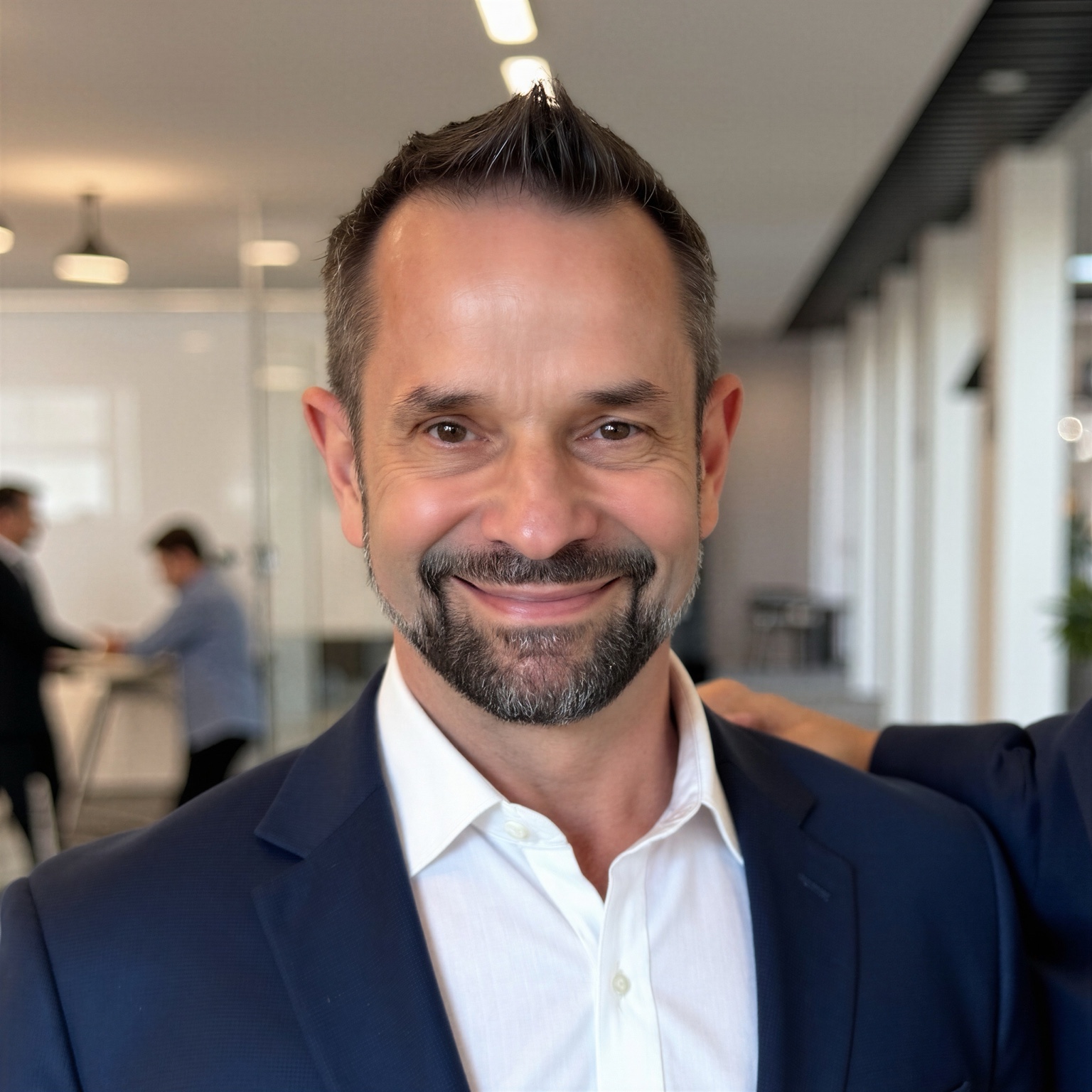
Article by
Robert Ensminger
Robert Ensminger is the founder and CEO of Executech Lease Group (ELG Leasing), which specializes in equipment leasing and financing solutions for the merchant-services, payments, POS, and FinTech industries. With more than 20 years of industry experience, Robert helps independent sales organizations, payment processors, POS providers, and software companies develop practical leasing, subscription, and SaaS-monetization programs. He founded ELG in 2010 and guided the company to recognition on the Inc. 5000. His work focuses on responsive service, transparent program structures, and helping ELG’s partners close more business while creating sustainable revenue.