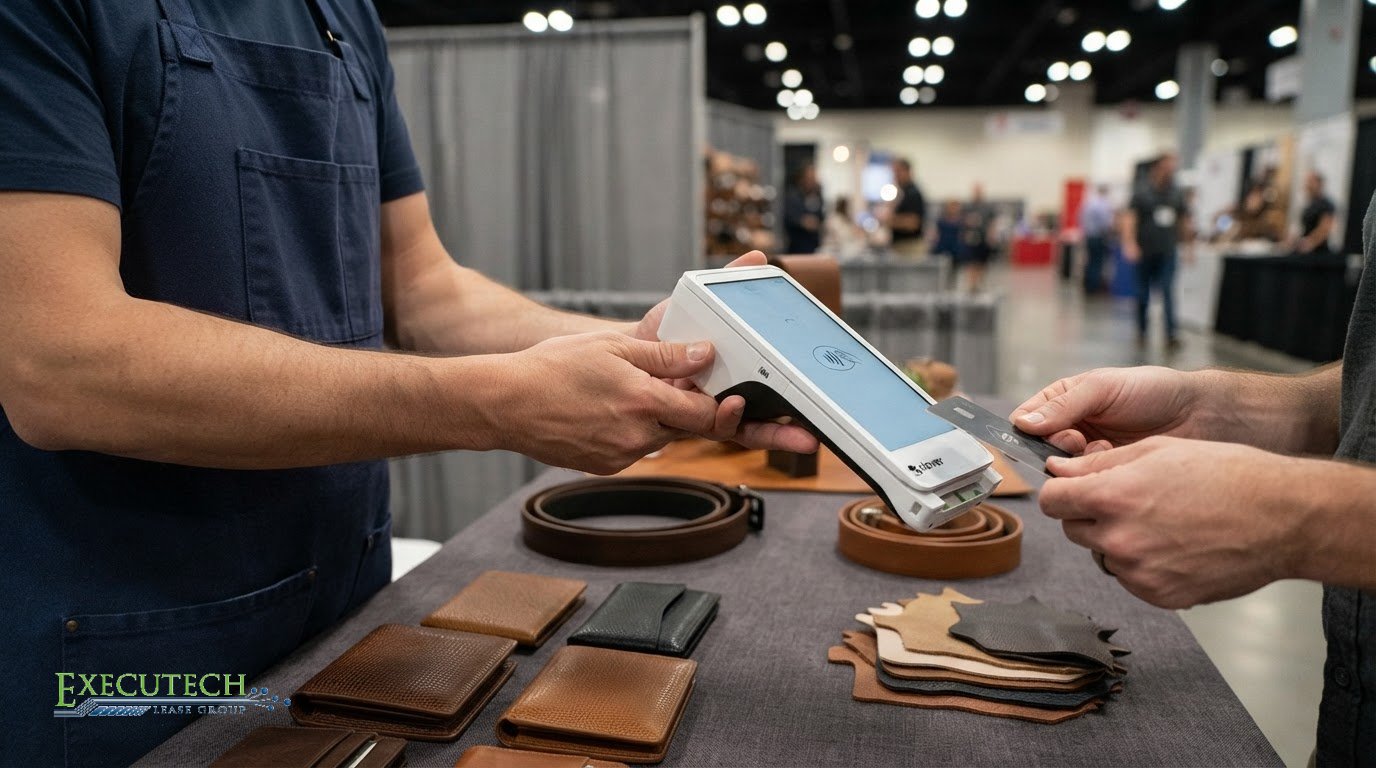
A payment terminal does more than take a card. It accepts debit, credit, and mobile payments, then connects to card networks to authorize transactions. Payment terminal leasing for trade show vendors is one way to acquire this equipment without buying it outright.
Your setup should fit how you sell at an event, whether you use a standalone terminal or hardware connected to a point-of-sale system. Payment methods, equipment needs, and how long you need the hardware all shape the decision. The payment device is only one part of the setup; the financing plan matters too.
This guide explains what terminals do, which equipment may suit a trade show booth, and how renting, buying, leasing, and subscriptions differ. Consider how ownership, recurring payments, and contract terms affect each option before choosing a structure for your business.
Key Takeaways
- Match your terminal to the way you take payments: a standalone device can work on its own, while an integrated terminal connects with POS software.
- Compare buying, renting, and leasing by considering total contract costs, ownership, and how long you expect to use the equipment.
- For a used trade show exhibit system, inspect its frames, connectors, cases, and lighting, and confirm that new graphics will fit.
- Choose hardware and POS integrations around your booth’s sales workflow, then scale the setup to your operational needs.
- Lease-to-own and fair market value options structure equipment financing differently; understand the end-of-term arrangement before choosing.
First, What is a Credit Card Terminal?
A credit card terminal accepts debit, credit, and mobile payments and connects to card networks to request transaction authorization. At a trade show, it lets you take payment at your booth rather than record a sale for later. The terminal may operate independently or connect to a point-of-sale system.
Buying gives you ownership after the purchase, while leasing spreads equipment costs across scheduled payments. A payment terminal lease commonly lasts 36 to 60 months, though contract terms differ. A longer term can lower each payment while increasing the total paid over time. Compare the full payment schedule, not only the monthly amount.
Calculate the contract total by multiplying each scheduled payment by the number of payments, then adding any stated end-of-term amount. For example, a 60-month agreement has 60 scheduled payments. Check whether the contract ends with equipment ownership, a purchase option, or another required step. Returning equipment early may not end payment obligations; the signed agreement controls.
Check processor compatibility before committing. A terminal configured for one payment provider may not work with another provider’s setup, and some proprietary devices are restricted to an associated platform. Switching providers may require compatible hardware or configuration, adding expense and setup work. Confirm compatibility when comparing equipment and processing arrangements.
Before a trade show, choose a terminal compatible with your processing provider, review the lease term and total obligation, then arrange configuration and test a transaction. Complete the test before the event to catch setup issues before taking customer payments.
For trade show vendors, a useful comparison weighs upfront capital, expected use, and contract obligations. A terminal used occasionally may have different budget implications from one used throughout the year. Compare the purchase alternative with every scheduled lease payment and end-of-term obligation. This helps you assess the full commitment instead of mistaking a lower monthly payment for a lower total cost.
Renting, buying, or leasing payment terminals
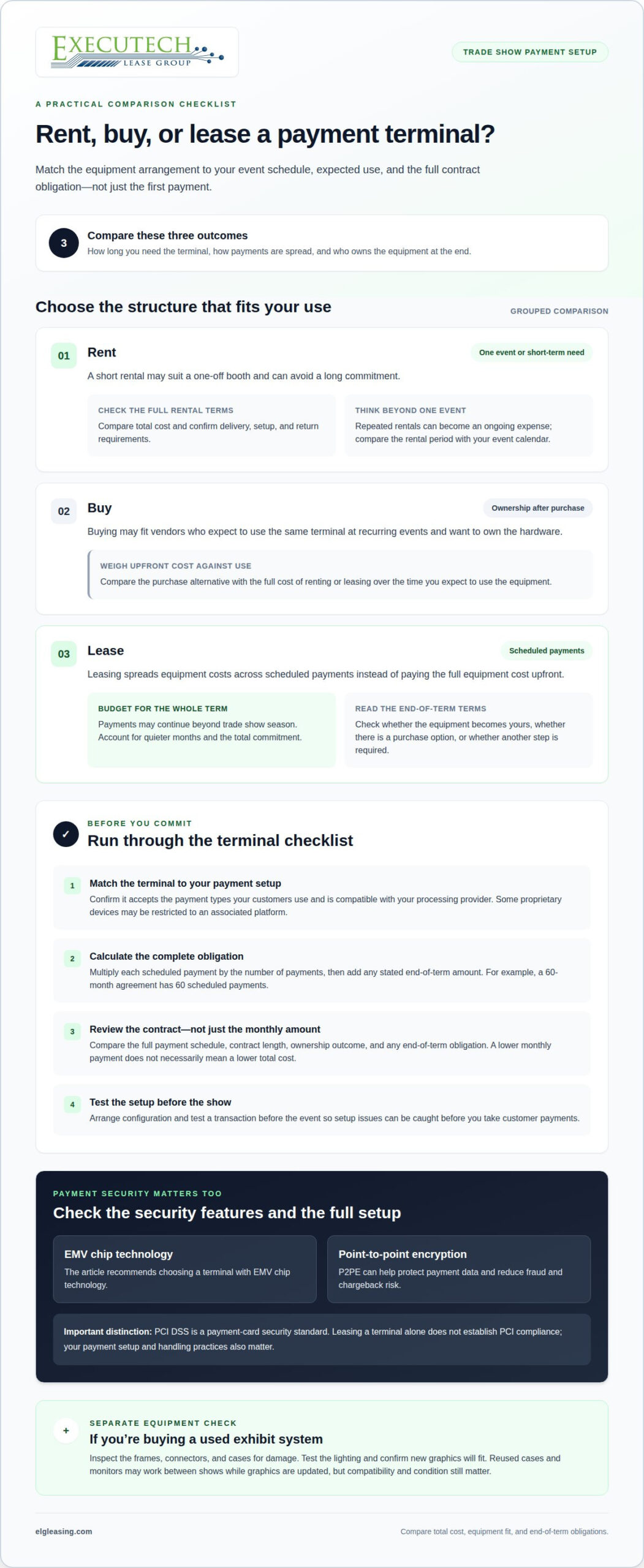
Renting, buying, and leasing spread equipment costs differently. Renting may suit a vendor who needs a machine for one event; buying gives the business ownership; leasing spreads payments over a contract term. Compare the total obligation and ownership outcome, not just the first payment. Also confirm that the terminal can accept the payment types your customers use.
Buying may suit a vendor who expects to use the same terminal at recurring events and wants to own the hardware. Leasing can reduce the upfront expense but creates ongoing monthly payments. A lease may run beyond the trade show season, so account for quieter months in your budget. The end-of-term terms also determine whether the equipment becomes yours.
Renting can avoid a long commitment, but the rental terms determine the total cost and what happens after the event. A short rental may work for a one-off booth, while repeated rentals can become an ongoing expense. Compare the rental period with your event calendar and factor in delivery, setup, and return requirements.
Trade show vendors may also buy used exhibit systems. Before purchasing, inspect frames, connectors, and cases for damage, test the lighting, and check that new graphics will fit. Displays often reuse cases and monitors between shows while updating graphics for each event. A frame may look intact but still need compatible graphics or working connectors to suit your booth plan.
Security deserves equal attention with cost. Choose a terminal with EMV chip technology and point-to-point encryption (P2PE), which can help protect payment data and reduce fraud and chargeback risk. PCI DSS is a payment-card security standard; leasing a terminal alone doesn’t establish PCI compliance. Your payment setup and handling practices also matter.
Before signing, compare the payment amount, contract length, processing compatibility, and end-of-term obligations. If a provider’s terminal is proprietary, switching processors may require different hardware or extra setup. Inspect a used exhibit system separately from the payment terminal: each has distinct compatibility and condition risks.
If scheduled payments fit your equipment budget, you can start an equipment application and outline the hardware needs for your trade show operation.
What is equipment leasing?
Equipment leasing lets a business use a payment terminal or POS system in exchange for scheduled payments. Instead of paying the full equipment cost upfront, the vendor commits to a contract and its terms. In the United States, lease terms can span 12 to 60 months. The right fit depends on your event schedule, budget, and how long the equipment should serve your business.
Start with the budget. Monthly payments can make equipment costs predictable, but the total commitment extends across the entire lease term. Compare that term with your expected use. Payment terminals can have a functional lifespan of 3 to 5+ years, while technology can become obsolete or require replacement. A contract that outlasts your equipment’s useful life can leave you paying for hardware you no longer need.
Upgrade frequency matters as well. If your POS system and terminal meet your needs across multiple seasons, ownership or a longer lease may fit. If you expect your needs to change, review how the agreement handles equipment at the end of the term. Don’t assume you can change equipment during a lease; the signed terms determine your options.
Processor incentives can affect the apparent cost. A provider may offer a “free” terminal while recovering its cost through processing fees or surcharges in the agreement. Compare the full processing arrangement with the hardware terms. A low upfront cost doesn’t reveal the total expense, and the terminal’s compatibility with your current provider matters if you later switch processors.
Available equipment ranges from a standalone mobile card terminal to a POS system with connected components. Choose based on how you sell: a vendor taking payments at a compact booth may need a different setup from one managing inventory and sales through POS software. Leasing can spread the equipment commitment; buying can make sense when the business wants ownership and expects stable needs. A month-to-month rental may suit temporary use, while a lease is a longer commitment. Compare the term, total payments, and end-of-term outcome before deciding.
With payment terminal leasing for trade show vendors, match the contract to equipment life and event frequency. Vendors attending recurring shows should weigh repeated equipment use against payments during off-season months. FMV and lease-to-own plans also have different end-of-term outcomes, so consider whether you want to own the equipment.
What payments hardware do I need?
Start with your booth’s sales workflow. A vendor selling a small product range may need a standalone credit card terminal, while a merchant tracking stock may benefit from a POS system with inventory software. Integrated terminals connect to POS software; standalone devices operate separately. Match the equipment to the tasks your team performs during each sale.
Connectivity matters at a trade show. Choose a terminal with a connection option that works with the venue’s network and your payment provider’s configuration. Venues may offer Wi-Fi, cellular access, or wired internet, depending on the event. Check the terminal’s connection requirements, then test a transaction over the planned network before opening your booth.
U.S. trade show venues set their own rules and fees for internet and exhibitor services. Review the event materials for network instructions, service charges, and restrictions on personal connections. Venue network policies affect setup, not the terminal’s lease contract.
POS software is useful when it supports a defined workflow. For example, you may want the system to track inventory and sales together instead of entering transactions in separate tools. List the tasks the software must handle, then choose compatible hardware and integrations. A terminal that cannot connect to your chosen POS software can create extra manual work at checkout.
Plan the number of devices around booth operations. One terminal may suit a single checkout point; multiple stations may need additional devices to serve customers independently. Consider the booth layout, staff workflow, and how sales move during busy periods. A lease can cover a planned set of devices, but the contract’s quantity and terms determine what is included.
Plan for growth rather than assuming you can change equipment mid-contract. If you expect to add booths or checkout stations in future seasons, choose a setup for current needs and plan separately for later equipment. At the end of a lease, reassess the POS software, integrations, and hardware together. A new arrangement may suit changed business needs.
For merchants with changing event plans, flexibility starts with a practical setup and a clear understanding of the contract. A compact booth focused on quick checkout differs from a business using inventory tools across several sales stations. Identify each device’s task, connection, or software requirement before committing.
Payment terminal leasing and subscription-style plans
A lease agreement sets payment obligations for specified equipment over a defined term. A subscription also involves recurring payments, but the label alone doesn’t explain what the fee covers. It may apply to hardware access, software, or a combination. When comparing a terminal-only lease with a software subscription, separate the hardware charge from any recurring software fee.
Buying outright creates a different cost pattern: you pay for the terminal upfront and own it instead of spreading the equipment expense across scheduled payments. Leasing distributes payments over the contract term, which may preserve upfront capital but creates an ongoing obligation. Compare the total scheduled payments and end-of-term terms with the cost of buying outright.
Consider a vendor using one terminal at recurring events. Buying requires a larger initial equipment payment, after which the vendor keeps the device. Leasing spreads payments across the agreed term, including the periods between events. The device may sit idle during quieter periods, but payments continue under the agreement. Event frequency alone doesn’t determine which structure costs less.
“Free terminal” offers also need a full-cost comparison. A provider may recover equipment costs through processing fees or surcharges in the agreement. Review equipment terms alongside processing charges. A low upfront cost may look attractive, but ongoing processing costs affect the total expense. Compare the terminal commitment separately from transaction charges.
Subscription plans are a useful comparison category, not a synonym for every lease. One arrangement may charge a recurring fee for terminal access; another may lease hardware under a fixed contract. The documents determine whether you own or return the terminal, or have an end-of-term purchase option. ELG does not provide software, replacements, maintenance, or upgrades.
For trade show vendors, compare three totals: the outright purchase cost, all lease payments plus end-of-term obligations, and every recurring fee in a subscription arrangement. Match each total to how often you’ll use the terminal and whether ownership matters. The payment schedule matters, as does what you receive and owe when the agreement ends.
Executech Lease Group (ELG Leasing): Credit Card Terminal Leasing
Executech Lease Group (ELG Leasing) helps merchants access credit card terminals and POS equipment through lease financing. For trade show vendors weighing upfront equipment purchases against ongoing payments, this can provide a structured way to acquire the hardware needed for checkout. The equipment must still fit your payment workflow and processing setup.
ELG offers credit card and POS equipment leases with terms from 12 to 60 months. That range lets merchants consider the contract length alongside expected equipment use, seasonal sales, and budget planning. The agreement covers payment-processing equipment, and an ISO can include installation and training when those services are bundled with the equipment.
Lease-to-own programs suit businesses that want a path toward ownership through their agreement. The contract terms define the payment schedule and the end-of-term obligations. Review those terms alongside the equipment list, so you understand what the arrangement covers and what happens when the term ends. This structure may fit vendors planning to use the same terminal across multiple events.
Fair market value, or FMV, lease options use a different end-of-term structure. The end-of-term terms can vary by lease option, so compare them before choosing. That distinction matters if you want to compare an FMV option with a lease-to-own program. Consider your expected equipment lifecycle and whether ownership at the end aligns with your business plan.
Payment terminal leasing for trade show vendors can make sense when you need payment hardware but prefer scheduled payments over an outright purchase. It may not fit if you need a short-term daily rental or want to buy equipment outright. Compare the contract duration, payment obligations, equipment configuration, and ownership outcome to see how the lease fits your event calendar and operating needs.
ELG focuses on equipment leasing, separate from payment processing. Bring your equipment requirements and preferred lease structure into the discussion. Clear details about the terminal, POS components, and expected use help frame the inquiry. Choose between lease-to-own and FMV based on your plans for the equipment at the end of the agreement.
Make your next equipment decision with clarity
Before your next event, define what your checkout setup needs to do. Consider the booth workflow, how often you’ll use the equipment, and the ownership outcome that fits your plans. These priorities give your financing discussion a clear starting point.
For payment terminal leasing for trade show vendors, Executech Lease Group (ELG Leasing) offers 12-60 month credit card and POS equipment leases, lease-to-own programs, and FMV lease options. Each structure handles equipment ownership differently, so consider which outcome aligns with your plans after the agreement ends.
Bring your equipment needs and preferred structure to ELG’s inquiry form to start a conversation about leasing. A focused inquiry helps you move from comparing arrangements to discussing one that fits your trade show operation.
Plan with purpose, and make your next event’s payment setup part of a stronger operating plan.
Frequently Asked Questions
Should you lease or should you buy?
Choose how you want to manage the equipment after acquiring it. Buying gives you ownership of the terminal, while leasing establishes obligations under an agreement. If you plan to keep a device across multiple seasons, consider who will manage its configuration, storage, and records. Decide whether you want to own the equipment or prefer a defined financing arrangement.
Does leasing cost more?
It can, depending on the payment schedule and the purchase alternative. For a useful comparison, consider how long you expect to use the equipment and whether preserving funds for other business needs matters. A lease’s total payments and end-of-term amount differ from its monthly payment. Compare the full obligations with the cost of buying the same equipment outright.
Subscription model for payment terminals: How does leasing work?
A subscription involves recurring charges, but the agreement determines what they cover. Separate equipment access from software or processing charges, and identify whether the arrangement ends with a return, continued use, or a purchase option. For example, distinguish terminal-related charges from POS software fees on a recurring invoice rather than treating them as one equipment payment.
How much does it cost to lease a payment terminal for a trade show?
The cost depends on the equipment and contract structure. Executech Lease Group (ELG Leasing) provides pricing based on the specific case after a quote request. The quote should be assessed against the equipment configuration and the full agreement, not just a recurring payment. For a trade show budget, separate terminal financing from event expenses such as booth fees, travel, and staffing.
What are the contract terms, minimums, and cancellation fees for payment terminal leases?
The signed agreement sets the payment obligations, term, and any applicable cancellation provisions. Before signing, identify the equipment covered, when payments begin, and the steps required at the end. A change in business ownership or a decision to stop attending events does not automatically change the agreement. Keep a copy with the records you use to manage equipment and vendor commitments.
Is it cheaper to rent, lease, or buy a payment terminal for occasional trade shows?
For infrequent events, consider the practical work of obtaining, transporting, storing, and preparing the terminal, not just its financing cost. A device used once may sit idle between shows; a purchased device also needs secure storage and inventory tracking. Repeated events may change the calculation. Compare arrangements against your actual event calendar and the work required to keep equipment ready.
Can trade show vendors use a leased terminal with their existing merchant account or POS system?
Compatibility depends on the terminal configuration, merchant account, and POS software. Before planning your booth workflow, identify the terminal model and required software connection. A processor change or software update can affect how the components work together. Keep the equipment lease separate from the merchant account relationship: each governs a different part of your setup.
What payment terminal features matter for trade show sales, such as contactless, offline mode, and receipts?
Prioritize functions based on checkout and recordkeeping needs. Contactless acceptance matters if customers expect to tap, while receipt options should fit how your business documents sales. Offline mode depends on the specific terminal and payment setup, so don’t assume transactions will process without a connection. Check how the device behaves during a network interruption before relying on it at an event.
This article reflects the author’s opinion for general information only and isn’t tax, legal, or accounting advice. Consult your CPA or attorney about your specific situation.

Article by
Robert Ensminger
Robert Ensminger is the founder and CEO of Executech Lease Group (ELG Leasing), which specializes in equipment leasing and financing solutions for the merchant-services, payments, POS, and FinTech industries. With more than 20 years of industry experience, Robert helps ISOs, payment processors, POS providers, and software companies build practical equipment leasing programs. He founded ELG in 2010. His work focuses on responsive service, transparent program structures, subscription and SaaS-monetization programs, and helping ELG’s partners close more business while creating sustainable revenue.